
- 1 - Importance-of-Footwork-in-TKD
- 2 - Basic-Footwork-Principles
- 3 - Footwork-for-Sparring
- 4 - Footwork-for-Self-Defense
- 5 - Common-Footwork-Drills
- 6 - Balance-and-Body-Positioning
- 7 - Advanced-Footwork-Techniques
- 8 - Real-Life-Application-and-Case-Studies
- 9 - Resources-and-Jeuns-TKD-Support
1. Importance of Footwork in Tae Kwon Do
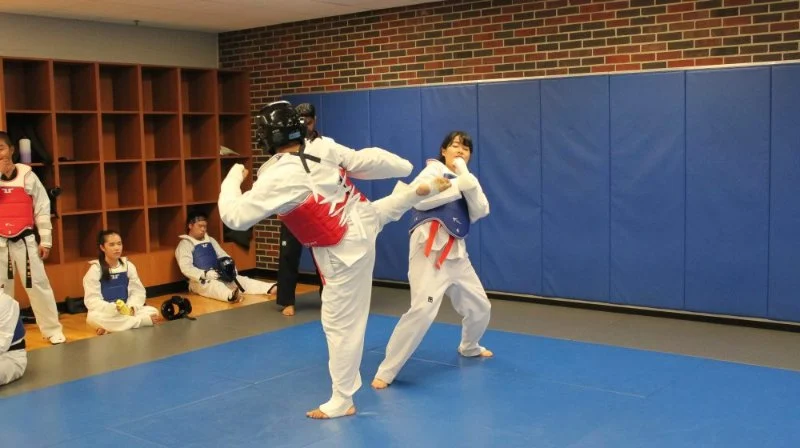
Footwork in Tae Kwon Do is the foundation of effective striking, defense, and movement. It allows practitioners to control distance, maintain balance, and create angles for attacks. Without proper footwork, even the most powerful kicks or punches can fail to land or leave the practitioner vulnerable.
Budo Martial Arts Studio / budo martial arts studio
Ewing TownshipMercer CountyNew Jersey
9 Scotch Rd, Ewing Township, NJ 08628, USA
1.1 Enhancing Agility and Speed
Well-trained footwork enables TKD practitioners to move swiftly in any direction, enhancing both offensive and defensive capabilities.
Champions Martial Arts Plainview / champions martial arts plainview
PlainviewNassau CountyNew York
10 Washington Ave, Plainview, NY 11803, USA
1.2 Maintaining Optimal Distance
Footwork is critical for controlling range during sparring, ensuring you can attack safely while minimizing exposure to counterattacks.
2. Basic Footwork Principles
Mastering the fundamentals is essential for effective movement.
2.1 Stance Awareness
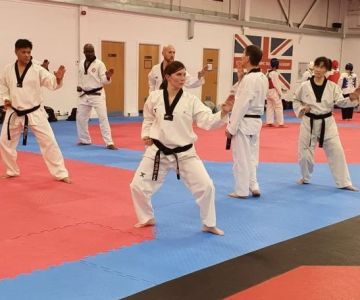
A stable stance provides a strong foundation. Ensure your feet are shoulder-width apart, knees slightly bent, and weight evenly distributed.
2.2 Step and Slide Techniques
Stepping involves moving one foot while the other follows, and sliding allows smoother lateral movement. Both are essential for maintaining balance and creating angles.
3. Footwork for Sparring
Sparring requires dynamic, reactive footwork to respond to opponents in real-time.
3.1 Forward and Backward Movement
Moving forward enables attack opportunities, while retreating safely protects against strikes.
3.2 Lateral Shifts
Side-to-side movements help evade attacks and create openings for counterattacks.
3.3 Angle Changes
Pivoting and shifting angles can disorient opponents, allowing more effective strike placement.
4. Footwork for Self-Defense
In self-defense, footwork prioritizes safety and control rather than purely offensive tactics.
4.1 Maintaining a Defensive Distance
Keep sufficient space from attackers to react and retreat if necessary.
4.2 Strategic Retreats and Advancements
Footwork allows safe disengagement or approach for controlling an assailant.
4.3 Quick Angle Adjustments
Pivoting or circling can reduce exposure and increase the effectiveness of defensive maneuvers.
5. Common Footwork Drills
Practicing structured drills builds muscle memory and enhances reflexes.
5.1 Ladder Drills
Improve speed and coordination by performing quick steps in and out of an agility ladder.
5.2 Cone Drills
Navigate around cones to simulate directional changes and maintain balance during movement.
5.3 Shadow Sparring
Combine footwork with imagined opponents to refine timing, distance control, and angles.
6. Balance and Body Positioning
Effective footwork relies on correct body alignment and weight distribution.
6.1 Center of Gravity
Keep the center of gravity low and stable to improve reaction speed and kicking power.
6.2 Weight Shifts
Learn to shift weight smoothly between legs for dynamic movement and strike execution.
7. Advanced Footwork Techniques
As practitioners progress, advanced methods enhance unpredictability and efficiency.
7.1 Fakes and Feints
Use subtle foot movements to mislead opponents, creating opportunities for counterattacks.
7.2 Pivoting and Spinning
Pivoting or spinning maneuvers can generate power for kicks and reposition strategically during sparring.
7.3 Combination Footwork
Integrate multiple movement patterns to adapt to fast-changing sparring scenarios or self-defense situations.
8. Real-Life Application and Case Studies
Observing practical examples demonstrates the effectiveness of proper footwork.
8.1 Sparring Competitions
Competitors who maintain precise footwork often control matches by dictating pace and angles, demonstrating dominance over less mobile opponents.
8.2 Self-Defense Scenarios
Individuals trained in footwork can evade attackers, maintain distance, and execute controlled strikes, reducing injury risk while ensuring safety.
9. Resources and Jeuns TKD Support
Jeuns TKD Hub provides instructional videos, step-by-step drills, and expert guidance for improving footwork in Tae Kwon Do. Utilizing these resources enhances sparring proficiency, self-defense readiness, and overall TKD performance.
Consistent practice of foundational and advanced footwork techniques ensures agility, balance, and control in both competitive and real-world situations. With Jeuns TKD Hub, learners can access expert strategies, drills, and insights to master footwork for sparring and self-defense effectively.


 Aikido of San Jose4.0 (7 reviews)
 Nikko Jujitsu School4.0 (9 reviews)
 Gracie Barra San Clemente Martial Arts4.0 (47 reviews)
 Karate Institute of America4.0 (4 reviews)
 Keweenaw Korean Martial Arts0.0 (0 reviews)
 Wing Chun School of Internal Arts5.0 (6 reviews)
 How to Execute a Jumping Roundhouse Kick to the Head
 How to Execute a Double Kick Combination in Sparring
 How to Perform a Flawless Axe Kick: A Step-by-Step Guide
 DIY Tae Kwon Do Training Equipment for Home Practice
 How to Increase Your Vertical Jump for Tae Kwon Do Flying Kicks
 The History of the Tae Kwon Do Peace Corps