
- sport-poomsae-competition-basics
- traditional-forms-showcase-purpose
- judging-criteria-differences
- training-methods-for-each-style
- role-of-poomsae-in-modern-taekwondo
- choosing-the-right-training-path
1. Understanding Sport Poomsae Competition and Its Modern Purpose
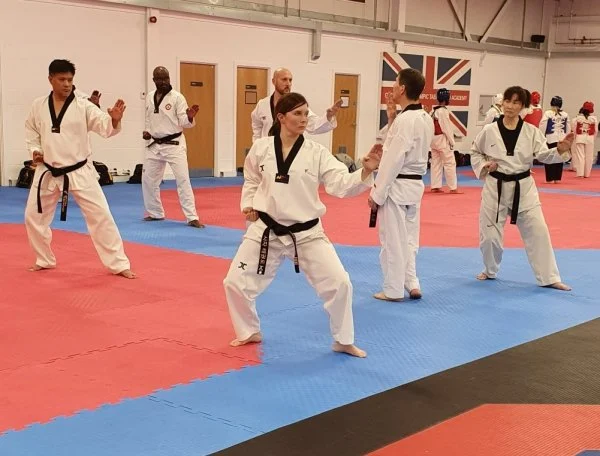
Tae Kwon Do has evolved far beyond simple self-defense training. Today, practitioners participate in different forms of competition that highlight discipline, technique, balance, speed, and artistic expression. One of the most recognized formats is the sport poomsae competition, where athletes perform official Tae Kwon Do patterns under strict rules and are evaluated by trained judges.
Many beginners and even experienced martial artists wonder about the difference between a sport poomsae competition and a traditional forms showcase. Although both involve performing martial arts forms, their goals, judging methods, and preparation styles are quite different. Understanding these differences helps students decide which experience best matches their personal goals.
Budo Martial Arts Studio / budo martial arts studio
Ewing TownshipMercer CountyNew Jersey
9 Scotch Rd, Ewing Township, NJ 08628, USA
1.1 What Is Sport Poomsae?
Sport poomsae is a competitive discipline within Tae Kwon Do where athletes perform standardized forms recognized by international governing organizations. The focus is not only on remembering the movements but also on executing them with precision, power, rhythm, and technical accuracy.
A competitor may spend months refining a single poomsae because even small details can influence the final score. The angle of a block, the timing between movements, the stability of a stance, and the expression of controlled energy all contribute to the overall performance.
Champions Martial Arts Plainview / champions martial arts plainview
PlainviewNassau CountyNew York
10 Washington Ave, Plainview, NY 11803, USA
1.2 Why Athletes Choose Sport Poomsae
Many athletes choose sport poomsae because it offers measurable progress. Competitors can track improvement through tournament results, scoring feedback, and technical evaluations. For students who enjoy structured goals, sport poomsae creates a clear path from beginner training to advanced competition.
A young athlete may begin by learning basic forms at a local Tae Kwon Do school. Over time, the student develops stronger balance, flexibility, and movement control. Eventually, they may enter regional tournaments and compete against athletes with similar skill levels.
2. The Purpose of a Traditional Forms Showcase
A traditional forms showcase has a different philosophy. Instead of focusing mainly on competition scores, it highlights the history, culture, and deeper meaning behind martial arts movements. These events often emphasize storytelling, demonstration skills, and respect for traditional techniques.
Traditional forms showcases can include classic Tae Kwon Do patterns, self-defense demonstrations, breaking techniques, weapons demonstrations, or group performances. The objective is usually to educate and inspire an audience rather than determine a winner through strict scoring.
2.1 Preserving Martial Arts Heritage
Traditional forms are connected to the history of martial arts. Every movement has a purpose, whether it represents a defensive action, an attack, or a principle of body control. A showcase allows performers to communicate these ideas in a way that spectators can understand.
For example, an instructor may organize a demonstration showing how a basic Tae Kwon Do form connects to practical self-defense techniques. The audience sees not only the physical movement but also the philosophy behind the training.
2.2 Creativity and Personal Interpretation
Unlike sport poomsae competition, traditional showcases often allow more freedom. Performers may add music, synchronized team movements, dramatic transitions, or creative presentations. The goal is to create an engaging experience while maintaining respect for martial arts principles.
This makes traditional showcases popular for community events, cultural festivals, and martial arts demonstrations. They provide an opportunity for students of different ages and skill levels to participate together.
3. Key Differences in Judging and Evaluation
The biggest difference between a sport poomsae competition and a traditional forms showcase is how performance quality is evaluated. Sport competitions rely on standardized judging systems, while showcases usually focus on overall impact and presentation.
3.1 Sport Poomsae Competition Scoring
In a sport poomsae competition, judges typically evaluate several technical elements, including:
1. Accuracy of movements
2. Correct stances and posture
3. Balance and control
4. Speed and strength
5. Rhythm and coordination
6. Overall presentation quality
A competitor who performs a powerful movement but loses balance may receive deductions. Similarly, a technically correct performance with poor timing may not achieve the highest score.
3.2 Traditional Showcase Evaluation
Traditional forms showcases usually have broader evaluation standards. Judges or organizers may consider confidence, creativity, audience engagement, teamwork, and respect for traditional techniques.
A showcase performer does not necessarily need to perform the fastest or most technically difficult routine. Instead, the performance should communicate martial arts spirit and create a memorable experience.
4. Training Differences Between Sport Poomsae and Traditional Forms
Although both styles require dedication and discipline, the training approach can be very different. Students preparing for a sport poomsae competition usually follow a highly structured program focused on repetition and technical improvement.
4.1 How Sport Poomsae Athletes Train
Competitive poomsae athletes often practice the same form hundreds or thousands of times. Repetition allows movements to become automatic while improving consistency.
Training may include:
1. Flexibility exercises for higher kicks and stronger positions
2. Strength training for explosive movements
3. Video analysis to correct mistakes
4. Balance drills for stable stances
5. Mental preparation for tournament pressure
Many successful athletes describe poomsae training as similar to learning a musical instrument. A musician repeats scales to improve accuracy, while a martial artist repeats forms to improve movement quality.
4.2 How Showcase Performers Prepare
Traditional showcase preparation often focuses on communication and teamwork. Performers practice timing, formations, and transitions to create a smooth presentation.
A team demonstration might require every member to move at exactly the same moment. A slight delay can affect the visual impact, so coordination becomes an important skill.
5. The Role of Poomsae in Modern Tae Kwon Do
Poomsae remains one of the most important parts of Tae Kwon Do training because it develops skills that support both competition and everyday martial arts practice. Whether someone participates in tournaments or demonstrations, forms training builds discipline and body awareness.
5.1 Benefits for New Students
For beginners, learning forms creates a foundation for future progress. Students learn how to control their body, understand basic techniques, and develop confidence.
A white belt student may initially struggle with remembering movements or maintaining proper stance. However, consistent practice gradually improves coordination and focus.
5.2 Benefits for Experienced Practitioners
Advanced students use poomsae to refine details that are often invisible to beginners. Small adjustments in breathing, timing, and movement efficiency can significantly improve performance.
Many instructors encourage students to explore both competition and traditional demonstrations because each experience develops different qualities.
6. A Practical Example: Two Students, Two Goals
Consider two Tae Kwon Do students named Alex and Daniel. Both have trained for three years, but their goals are different.
Alex enjoys competition. He spends extra hours practicing poomsae, recording his performances, and preparing for tournaments. His goal is to achieve higher scores and compete at advanced levels.
Daniel enjoys performing for the community. He participates in school demonstrations and cultural events. He enjoys combining forms with breaking techniques and helping others understand martial arts traditions.
Neither approach is better. They simply represent different ways to experience Tae Kwon Do. A sport poomsae competition develops competitive excellence, while a traditional forms showcase develops communication and cultural appreciation.
7. Choosing Between Sport Poomsae and Traditional Forms Training
Choosing the right path depends on personal interests, personality, and goals. Students who enjoy challenges, rankings, and measurable improvement may prefer sport poomsae competition. Those who enjoy creativity, teamwork, and public performance may prefer traditional showcases.
7.1 Questions Before Choosing
Before deciding, students can ask themselves:
1. Do I enjoy competing against others?
2. Do I prefer strict rules or creative expression?
3. Do I want tournament experience or performance experience?
4. Do I enjoy individual achievement or team activities?
The right choice should match the student's motivation. Tae Kwon Do is not only about winning medals but also about personal growth.
7.2 Building Skills With Proper Guidance
Finding reliable training resources can make a significant difference. Students looking to improve their techniques, learn competition preparation methods, or explore traditional martial arts education can discover useful guidance through Jeuns TKD Hub.
A knowledgeable training environment helps students understand the differences between sport poomsae competition and traditional forms showcase while developing strong technical foundations.
8. How Both Styles Continue to Grow
Modern Tae Kwon Do continues to expand because it offers many ways for people to participate. Some athletes pursue international competition, while others practice for fitness, confidence, discipline, or cultural connection.
Sport poomsae competition brings precision and athletic challenge to martial arts. Traditional forms showcases preserve history and allow performers to share the beauty of Tae Kwon Do with wider audiences.
Together, these two approaches demonstrate the versatility of martial arts. Whether standing on a competition floor or performing in front of a community audience, practitioners continue the tradition of discipline, respect, and continuous improvement.



 Aikido of San Jose4.0 (7 reviews)
 Nikko Jujitsu School4.0 (9 reviews)
 Gracie Barra San Clemente Martial Arts4.0 (47 reviews)
 Karate Institute of America4.0 (4 reviews)
 Keweenaw Korean Martial Arts0.0 (0 reviews)
 Wing Chun School of Internal Arts5.0 (6 reviews)
 How to Execute a Jumping Roundhouse Kick to the Head
 How to Execute a Double Kick Combination in Sparring
 How to Perform a Flawless Axe Kick: A Step-by-Step Guide
 DIY Tae Kwon Do Training Equipment for Home Practice
 How to Increase Your Vertical Jump for Tae Kwon Do Flying Kicks
 The History of the Tae Kwon Do Peace Corps