
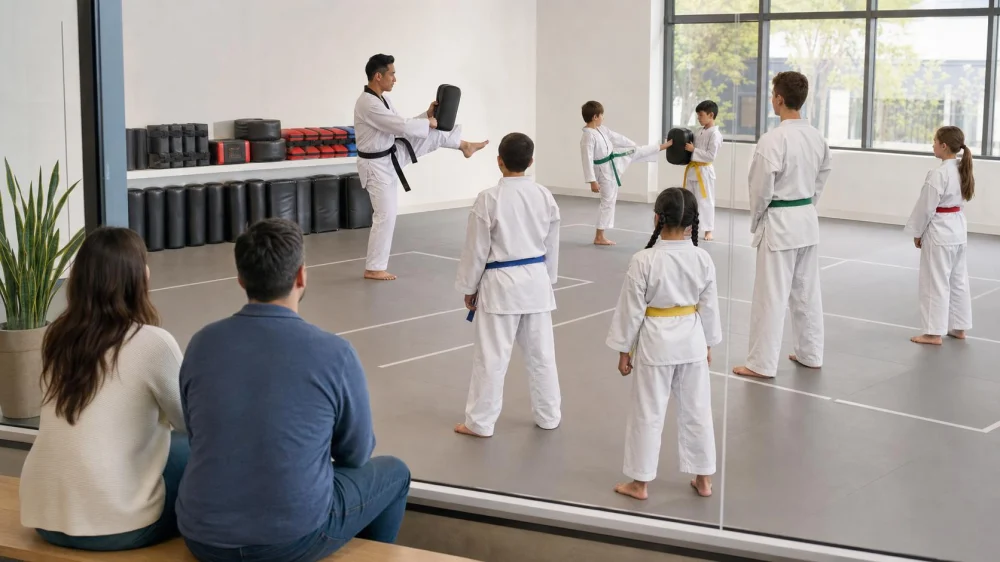
Tae Kwon Do Trial Class: What to Observe Before Joining
On this page
Quick answer
During a Tae Kwon Do trial class, watch how instructors explain skills, group students, correct unsafe movement and respond to questions. Look for controlled contact, progressive drills, clear stop signals, maintained floors and equipment, and respectful treatment of every student. Ask about instructor qualifications, class ratios, sparring, injury procedures, fees and cancellation terms. Choose a school where the actual class matches its promises.
SDSS Martial Arts of Newton / sdss martial arts of natick
NewtonMiddlesex CountyMassachusetts
739 Beacon St, Newton, MA 02459, USA
Prepare before the trial
- Confirm class time, age or experience group and expected arrival time.
- Ask what clothing is permitted and whether shoes are removed.
- Disclose relevant health, injury, sensory or access needs privately.
- Clarify whether the trial includes partner contact or sparring.
- Bring water and any prescribed emergency medication.
- Ask whether a parent or support person may observe.
A trial class is a limited opportunity to experience instruction, culture and logistics before making an enrollment commitment. It is not a test of whether a beginner already performs techniques well.
Lee’s Taekwondo Martial Arts / master lee tkd
AnnapolisAnne Arundel CountyMaryland
1787 Forest Dr, Annapolis, MD 21401, USA
Observe the teaching process
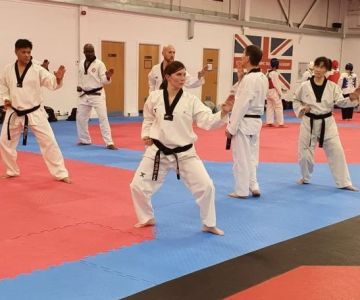
- Explanation: the instructor states the goal and demonstrates from a visible angle.
- Progression: students practice a simple component before adding speed, power or a partner.
- Correction: feedback is specific, calm and matched to experience.
- Scanning: instructors watch the whole room rather than only advanced students.
- Options: reasonable modifications are offered without ridicule.
- Pacing: students have enough space and time to reset safely.
- Closing: the class reviews learning and communicates next steps.
Strong discipline does not require humiliation, threats or forcing a student through pain. Respect should flow between instructors, students and families.
Check the safety culture
- Warm-up matches the planned activity and intensity rises gradually.
- Training area is clean, dry and free of bags or equipment in movement paths.
- Targets, pads and protective equipment appear maintained and correctly used.
- Partners are matched with attention to size, experience and control.
- Students understand stop commands and can opt out when unwell or injured.
- Contact rules are stated before drills and enforced consistently.
- Staff know the emergency plan, first-aid location and incident reporting process.
- Head impacts, dizziness and suspected concussion are taken seriously; same-day return is not pressured.
Best sign: control and safety are praised as skills. Warning sign: uncontrolled contact is dismissed as toughness or beginners are pushed into advanced sparring.
Evaluate the student's fit
After class, ask the participant what felt clear, enjoyable, confusing and uncomfortable. For a child, separate ordinary first-day nervousness from fear caused by shouting, unsafe contact or disrespect.
- Did the class challenge the student without leaving them lost?
- Could they hear, see and follow instructions?
- Were peers welcoming and controlled?
- Did the schedule and travel feel sustainable?
- Does the school support recreation, competition, fitness or traditional practice in the way the student wants?
- Are accommodations discussed realistically?
Questions for the school
- Who teaches this specific class, and what training or background checks apply?
- How are instructors supervised and continuing education handled?
- What is the typical instructor-to-student ratio?
- When does partner contact begin, and is sparring optional or required?
- Which protective equipment is required and who checks fit?
- How are injuries, suspected concussion and emergencies handled?
- How do belt testing and promotion decisions work?
- Can the student try more than one class before enrolling?
Credentials and organization affiliations differ across Tae Kwon Do systems. Ask what a credential means and verify material claims with the issuing organization.
Review enrollment terms
- Tuition, registration, uniform, equipment, testing and event fees.
- Contract length, renewal, cancellation and freeze rules.
- Make-up classes and holiday closures.
- Competition, demonstration or leadership-program expectations.
- Photo, video and social-media consent.
- Refund treatment if class schedule or instructor changes.
Take the agreement home when possible. Do not let a limited-time sales offer replace review of the total cost and obligations.
Health and scope notes
This article provides general martial-arts school evaluation and safety information, not medical advice or a guarantee against injury. People with health conditions, recent concussion, surgery or ongoing pain should follow qualified healthcare guidance before participating.
A directory listing, review score or trial class is only one source. Verify current location, staff, insurance practices, safeguarding policies and terms directly with the school.
Frequently asked questions
Should a beginner spar in the first class?
Programs differ, but beginners should not be placed into uncontrolled contact. Ask how skills, rules and protective equipment are introduced progressively.
Is a crowded class automatically unsafe?
No, but space, instructor coverage, drill design and student control must support safe supervision.
Does a black belt prove teaching skill?
No. Rank may reflect technical progression within a system; teaching, safeguarding and class management require additional abilities.
Should parents be allowed to watch?
Observation policies vary. A school should explain its approach and provide transparent ways to understand instruction and safeguarding.
How many trial classes are enough?
One class gives a snapshot. Observing another instructor, class type or day may reveal whether the experience is consistent.
Next steps
Attend the trial with five priorities: instruction, control, respect, logistics and transparent cost. Take notes immediately afterward, ask unresolved safety and contract questions, and compare at least one alternative school when available before committing.

 East Coast Karate5.0 (22 reviews)
 Watertown Kung Fu Meditation Center5.0 (26 reviews)
 Toyama Karate-Do Academy5.0 (1 reviews)
 Cuascut's Academy of Martial Arts5.0 (60 reviews)
 True Balance Karate4.0 (99 reviews)
 Elevated Martial Arts5.0 (11 reviews)
 How to Execute a Jumping Roundhouse Kick to the Head
 How to Execute a Double Kick Combination in Sparring
 How to Perform a Flawless Axe Kick: A Step-by-Step Guide
 DIY Tae Kwon Do Training Equipment for Home Practice
 How to Increase Your Vertical Jump for Tae Kwon Do Flying Kicks
 The History of the Tae Kwon Do Peace Corps