
Tae Kwon Do Trial Class: Check Schedule, Gear, and Rules
On this page
- Choose the right class
- Confirm trial cost and registration
- Ask what to wear and bring
- Share health and access needs
- Arrive early and learn the space
- Understand contact and partner work
- Follow school etiquette
- Observe instruction and safety
- Review membership without rushing
- Reflect after the class
- Trial class checklist
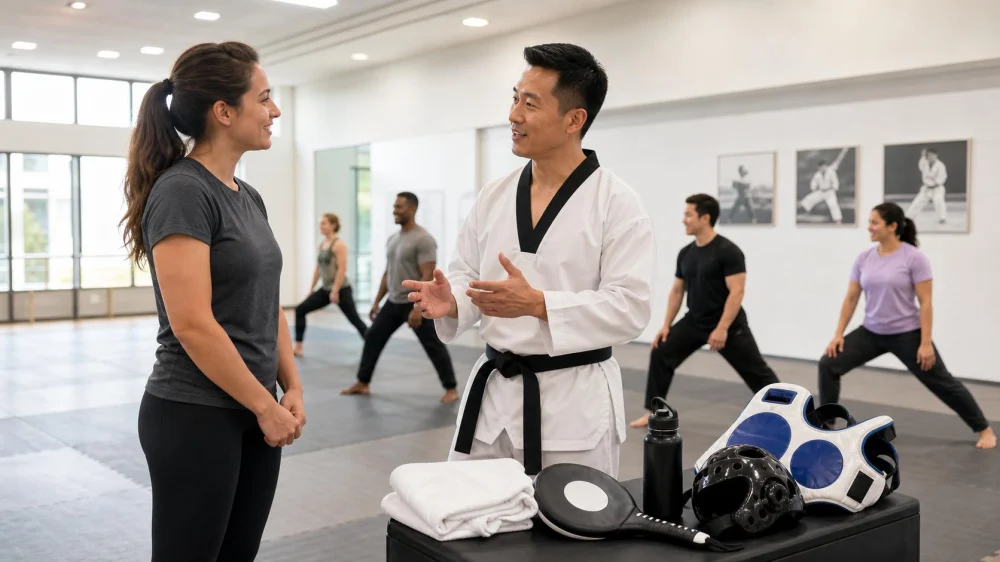
A Tae Kwon Do trial class should help a student understand the school, instructor, training style, and beginner expectations. It is not a test of toughness or flexibility. A well-planned first visit confirms the correct age and experience group, required clothing, contact level, safety procedures, fees, and what happens after the trial.
Schools use different curricula, commands, rank systems, uniforms, and competition rules. Contact the specific location rather than assuming every Tae Kwon Do program works the same way. The best trial is one where questions are welcome and the student can participate within safe, clearly explained limits.
Budo Martial Arts Studio / budo martial arts studio
Ewing TownshipMercer CountyNew Jersey
9 Scotch Rd, Ewing Township, NJ 08628, USA
Choose the right class
Tell the school the student's age, previous martial arts experience, current activity level, and goals. Ask whether the trial joins a regular class, a private introduction, or a beginner orientation. Confirm the class length, instructor, group size, and whether parents or companions may observe.
For children, ask how age groups are divided and how readiness is assessed. For adults, confirm whether the class assumes prior kicking, floor work, or conditioning. A family or all-ages class can still adapt activities differently for each participant.
Champions Martial Arts Plainview / champions martial arts plainview
PlainviewNassau CountyNew York
10 Washington Ave, Plainview, NY 11803, USA
Confirm trial cost and registration
Ask whether the trial is free or paid, how many sessions it includes, when it expires, and whether equipment or a uniform is included. Check reservation, cancellation, late-arrival, and rescheduling rules. Save the confirmation for the exact location and date.
Review the registration form, waiver, privacy notice, photo policy, and emergency contact request before signing. Legal effect varies by jurisdiction; ask questions or obtain advice if a waiver is unclear. Confirm whether the trial automatically converts to a membership or requires a separate agreement.
Ask what to wear and bring
Many schools allow clean, comfortable athletic clothing for a trial, while others provide or require a uniform. Ask about shoes versus bare feet, socks, hair, nails, jewelry, glasses, protective gear, and changing facilities. Do not buy equipment until the school confirms its specifications.
Bring water, any required identification or form, and necessary personal medicine under an established plan. Leave valuables at home or secure them as the school directs. Clothing should allow movement without loose zippers, belts, pockets, or jewelry that can catch during drills.
Share health and access needs
Tell the instructor privately about relevant injuries, health conditions, sensory needs, communication preferences, or movement limits through the school's process. Ask how activities can be modified and where to take a break. A trial class is not the time to ignore medical restrictions to keep up.
Check the route from parking or transit through entrance, restroom, seating, changing area, and training floor. If individualized medical clearance or an emergency action plan is appropriate, obtain guidance from a qualified clinician before class.
Arrive early and learn the space
Arrive with enough time to check in, complete forms, meet the instructor, change, and hear basic rules. Learn where shoes, bags, water, restrooms, exits, and first-aid supplies are located. Stay outside the training floor until invited.
Ask how to enter and leave the mat, line up, address instructors, and request a pause. Warm up only under instruction. Do not kick bags, try equipment, or copy advanced students before the class begins.
Understand contact and partner work
Ask whether the trial includes pad work, partner drills, sparring, falling, board breaking, or no contact at all. Confirm required protective equipment and how partners agree on speed, power, target, and stopping cues. A beginner should not be surprised by contact.
Students should be able to stop when they are hurt, dizzy, confused, overwhelmed, or unsafe. Partner size and experience should be considered. Never pressure a trial student to spar, break a board, or perform a high-risk technique to prove commitment.
Follow school etiquette
Schools may bow, use Korean terms, line up by rank, or follow specific traditions. Watch the instructor and ask respectfully when unsure. Etiquette should support focus and mutual respect, not silence legitimate safety questions.
Keep phones away unless needed for accessibility or emergency use. Ask before taking photos or video, since other students—especially minors—may not consent. Avoid coaching from the viewing area or interrupting instruction.
Observe instruction and safety
Look for clear demonstrations, progressive difficulty, adequate space, supervised partner matching, maintained equipment, and a consistent stop signal. Notice whether instructors correct technique respectfully and adapt for beginners instead of rewarding reckless intensity.
Ask about instructor qualifications, safeguarding, background checks where relevant, emergency procedures, head-impact response, cleaning, and incident reporting. Verify claims through appropriate organizations when they matter to your decision.
Review membership without rushing
Request the full membership agreement, schedule, tuition, registration, uniform and gear costs, testing fees, event charges, cancellation, freezes, renewal, and notice requirements. Ask what is optional and what is required for progression.
Do not sign a long-term agreement solely because a same-day discount is ending. Compare the class experience with the written terms, commute, schedule, and budget. A reputable school should explain its policies clearly.
Reflect after the class
Consider whether the student felt welcomed, understood the instructions, had enough space, and could ask for help. Note the balance of technique, conditioning, tradition, contact, and personal attention. For a child, ask open questions rather than only “Did you win?”
Normal exertion can feel different from pain, dizziness, confusion, or injury. Stop and seek appropriate medical guidance for concerning symptoms. Contact the school with factual feedback or questions before deciding on enrollment.
Trial class checklist
- Confirm the correct age, experience, and beginner class.
- Check cost, sessions, expiration, and automatic conversion.
- Ask what clothing, shoes, gear, and water to bring.
- Share relevant health, access, and communication needs.
- Arrive early for forms, rules, and orientation.
- Clarify contact, partner drills, protection, and stop cues.
- Respect etiquette, privacy, and photo policies.
- Observe progressive teaching and safety supervision.
- Read all membership and testing costs before signing.
- Reflect on fit, comfort, schedule, and recovery afterward.
A Tae Kwon Do trial class is successful when it produces clear information, not exhaustion. Confirm the practical terms, participate at a beginner-appropriate level, observe the teaching environment, and review the full membership separately. The right school makes safety, respect, and gradual learning visible from the first visit.

 Aikido of San Jose4.0 (7 reviews)
 Nikko Jujitsu School4.0 (9 reviews)
 Gracie Barra San Clemente Martial Arts4.0 (47 reviews)
 Karate Institute of America4.0 (4 reviews)
 Keweenaw Korean Martial Arts0.0 (0 reviews)
 Wing Chun School of Internal Arts5.0 (6 reviews)
 How to Execute a Jumping Roundhouse Kick to the Head
 How to Execute a Double Kick Combination in Sparring
 How to Perform a Flawless Axe Kick: A Step-by-Step Guide
 DIY Tae Kwon Do Training Equipment for Home Practice
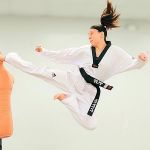 How to Increase Your Vertical Jump for Tae Kwon Do Flying Kicks
 The History of the Tae Kwon Do Peace Corps