
Tae Kwon Do Training Log: Track Drills, Cues, and Recovery
On this page
- Keep the log simple
- Record the class context
- Name drills the school's way
- Capture one or two coaching cues
- Track contact and partner conditions
- Note effort without chasing numbers
- Log pain, injury, and warning signs
- Review sleep, hydration, and recovery
- Turn notes into the next practice
- Protect privacy and school materials
- Training log checklist
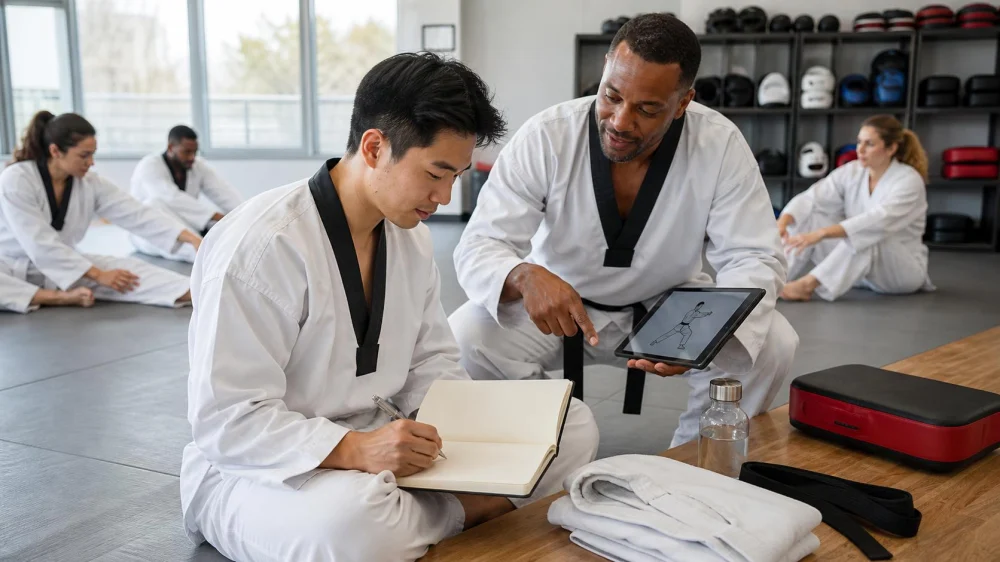
A Tae Kwon Do training log preserves the useful details that disappear after class: the drill, one correction, a stance that felt stable, the round where distance broke down, or the recovery issue that changed movement. The goal is not to document every kick. It is to create a short record that guides the next safe practice.
Use the terms and priorities taught by your school. Rank requirements, poomsae, sparring rules, commands, and technique names vary. A notebook or simple private digital file is enough when it is updated consistently and reviewed with the instructor.
Budo Martial Arts Studio / budo martial arts studio
Ewing TownshipMercer CountyNew Jersey
9 Scotch Rd, Ewing Township, NJ 08628, USA
Keep the log simple
Choose a format you can complete in three to five minutes. Use the same fields each time: date, class, main drills, coaching cues, effort, contact, symptoms, recovery, and next focus. A complicated tracker is likely to be abandoned.
Write soon after class while details are fresh, but cool down and address health needs first. Use short phrases rather than an essay. Leave room for a later instructor clarification so a misunderstood cue does not become permanent.
Champions Martial Arts Plainview / champions martial arts plainview
PlainviewNassau CountyNew York
10 Washington Ave, Plainview, NY 11803, USA
Record the class context
Note the class type, duration, instructor, training goal, and whether it focused on basics, poomsae, pad work, partner drills, sparring, conditioning, or test preparation. Record unusual conditions such as heat, a crowded floor, new gear, or returning after an absence.
Context explains performance. A balance problem late in a long conditioning class may mean something different from the same issue during a fresh technical warm-up. Do not compare two sessions without noting how they differed.
Name drills the school's way
Use the Korean or English term the instructor uses and add a plain description if needed. Record stance, direction, target, partner role, equipment, and sequence. Avoid inventing a name that could later refer to a different technique.
For poomsae, note the section or transition rather than copying an entire copyrighted or school-owned curriculum. For combinations, record enough to remember the pattern and ask the instructor whether personal notes are permitted.
Capture one or two coaching cues
Write the correction in the instructor's words when possible: “return guard before the next step” or “set the base before turning.” Add what you felt or observed, but label it as your note rather than official instruction.
Limit each class to the cues with the highest value. Trying to fix ten details at once can reduce attention and quality. At the next session, confirm that the cue still applies to the same drill and contact level.
Track contact and partner conditions
For partner work, note the drill, protective gear, target, agreed speed or contact, round length, and whether communication worked. Do not identify or criticize another student by full name in a casual log. Use a neutral label such as “taller partner” when context helps.
Record any unexpected contact, equipment movement, stop cue, or safety concern and report it through the school's process. A private note is not a substitute for an incident report or immediate concussion and injury response.
Note effort without chasing numbers
A simple easy, moderate, hard scale or a one-to-ten perceived effort rating can show trends. Add why it felt that way: pace, heat, sleep, new material, short rest, or high contact. The number is personal and should not become a competition.
Do not increase training merely to make the log look impressive. Quality, control, and safe technique matter more than the highest kick count or hardest rating. Use instructor guidance for volume and progression.
Log pain, injury, and warning signs
Record the time, body area, movement, sensation, severity, swelling, bruising, function, and what happened afterward. Use observable details and tell the instructor. Do not diagnose yourself from the pattern or return to contact because the note seems minor.
Stop and seek urgent medical help for loss of consciousness, worsening confusion, repeated vomiting, seizure, severe neck pain, weakness, trouble breathing, chest pain, major bleeding, or another emergency. Follow individualized medical guidance for return after injury.
Review sleep, hydration, and recovery
Note sleep quality, general energy, hydration, heat exposure, soreness, and whether the previous session still affects movement. Keep health details proportionate and private. A trend matters more than one imperfect night.
Record recovery actions that were actually used, such as rest, normal meals, prescribed care, or a lighter session. Do not add supplements, extreme stretching, dehydration, or unverified recovery treatments to improve a metric. Seek qualified guidance for persistent symptoms or declining function.
Turn notes into the next practice
End each entry with one technical focus, one safety or communication focus, and one question. Examples include “keep guard on roundhouse return,” “confirm contact before first round,” and “ask where the pivot begins.” These are easier to use than a vague goal to improve everything.
Review the last entry before class, then put the log away and follow the current instruction. The lesson may change. Do not practice an old cue when the instructor sets a different goal or correction.
Protect privacy and school materials
Do not include another student's health, behavior, contact details, or identifiable photo without permission. Keep video and audio under the school's consent policy. For minors, parents and schools should agree on appropriate record access.
Protect digital files with a secure account and avoid public posts that reveal attendance patterns or private facility information. A training log is for learning, not ranking classmates or publishing the school's full curriculum.
Training log checklist
- Use a short repeatable template after each class.
- Record class type, duration, goal, and conditions.
- Name drills with the school's terminology.
- Capture one or two high-value coaching cues.
- Note partner rules, contact, gear, and communication.
- Use a personal effort rating without competing.
- Document symptoms and report injuries promptly.
- Track sleep, energy, hydration, and recovery trends.
- Choose one next focus and one instructor question.
- Protect classmates' privacy and school materials.
A useful Tae Kwon Do training log is brief, honest, and connected to instruction. Record the class context, preserve the most useful cue, note safety and recovery, and turn the entry into one clear next step. Over time, those small records show patterns that memory misses without pulling attention away from the training itself.
 Aikido of San Jose4.0 (7 reviews)
 Nikko Jujitsu School4.0 (9 reviews)
 Gracie Barra San Clemente Martial Arts4.0 (47 reviews)
 Karate Institute of America4.0 (4 reviews)
 Keweenaw Korean Martial Arts0.0 (0 reviews)
 Wing Chun School of Internal Arts5.0 (6 reviews)
 How to Execute a Jumping Roundhouse Kick to the Head
 How to Execute a Double Kick Combination in Sparring
 How to Perform a Flawless Axe Kick: A Step-by-Step Guide
 DIY Tae Kwon Do Training Equipment for Home Practice
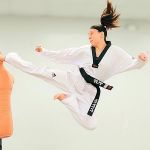 How to Increase Your Vertical Jump for Tae Kwon Do Flying Kicks
 The History of the Tae Kwon Do Peace Corps