
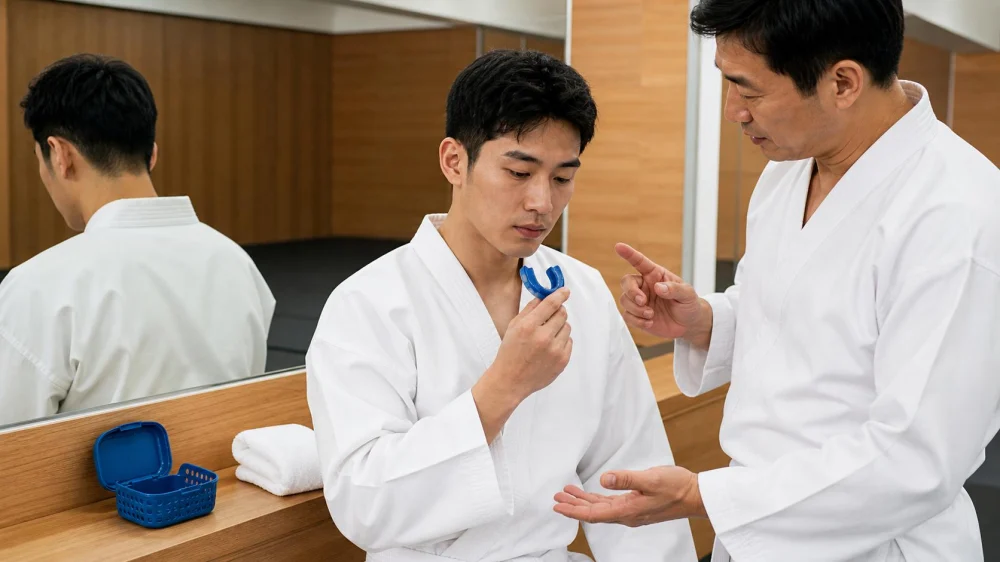
Tae Kwon Do Mouthguard Fit, Care, and Replacement
On this page
Quick answer
A Tae Kwon Do mouthguard should stay over the teeth without constant clenching, allow normal breathing and short speech, cover the intended teeth and gums without sharp edges, and match current tournament or dojang rules. Choose stock, boil-and-bite, or dentist-made protection based on fit and dental needs. Rinse after use, clean in cool water, dry in a vented case, and replace damage or poor fit promptly.

Budo Martial Arts Studio / budo martial arts studio
Ewing TownshipMercer CountyNew Jersey
9 Scotch Rd, Ewing Township, NJ 08628, USA
Mouthguard types
- Stock: ready-made and inexpensive, but often bulky and difficult to retain without biting.
- Boil-and-bite: softened and shaped according to the manufacturer; usually offers a more individual fit than stock.
- Custom-made: made by a dentist from a model or scan and can address fit, comfort, braces, restorations, and individual anatomy.
Best for sparring is the option an athlete will wear consistently and that fits securely. A higher price alone does not override poor fit or competition requirements.
Champions Martial Arts Plainview / champions martial arts plainview
PlainviewNassau CountyNew York
10 Washington Ave, Plainview, NY 11803, USA
Fit checklist
- Place the guard without forcing it.
- Open your mouth gently; it should remain in position rather than dropping immediately.
- Breathe through the mouth and nose at an easy training pace.
- Say a short coaching phrase clearly enough to communicate.
- Check for gagging, pinching, sharp edges, gum pressure, or a rocking fit.
- Close the jaw gently; do not reshape the bite by grinding or cutting without directions.
- Wear it during a controlled warm-up before any contact drill.
Do not use a guard that blocks breathing, causes bleeding, repeatedly dislodges, or requires hard clenching.
Braces and dental work
Braces need space for tooth movement and cushioning over brackets. Ask the orthodontist for a sports guard designed for braces and recheck fit as treatment changes. Do not wear a removable retainer during contact sport unless the orthodontist specifically directs it.
Crowns, bridges, implants, missing teeth, erupting teeth, or recent dental work also warrant dental advice. Children and teens need more frequent fit checks as jaws and teeth change.
Use during training
- Practice inserting, removing, breathing, and speaking before sparring.
- Wear it for partner drills and contact levels required by the instructor, not only tournaments.
- Keep it in the mouth or its case; do not tuck it into a belt, glove, or shared surface.
- Never share a mouthguard.
- Inspect it before every session and bring a backup when rules permit.
- Confirm colour, coverage, and design rules with the current event organizer.
Clean and store it
- Rinse before and after each use.
- Brush gently or clean with cool soapy water according to product instructions.
- Rinse thoroughly and air-dry.
- Store in a sturdy vented case.
- Wash and dry the case regularly.
- Keep away from sun, hot cars, boiling water after fitting, pets, and contaminated gear.
Heat can warp the fit. Strong chemicals, dishwashers, and boiling may damage material unless the maker specifically permits them.
When to replace
- Tears, splits, holes, sharp edges, or deep bite-through marks.
- Warping, hardening, sticky material, persistent odour, or discolouration.
- It falls out, pinches, obstructs breathing, or no longer seats fully.
- Dental treatment, new braces, tooth eruption, or jaw growth changes fit.
- A major impact damages the guard or teeth.
- The dentist, orthodontist, manufacturer, instructor, or sport rules require replacement.
If a dental injury happens
Stop training and tell the instructor. For a cracked tooth, rinse gently and seek a dentist promptly. For uncontrolled bleeding, severe pain, suspected jaw fracture, breathing trouble, or significant facial trauma, seek urgent or emergency care.
A mouthguard can reduce some mouth and dental injuries but cannot prevent every tooth injury, jaw injury, or concussion. Head-impact symptoms need the established concussion protocol even if the guard looks intact.
Limitations and rules
Equipment rules vary among dojangs, schools, sanctioning bodies, divisions, and events and can change. Verify current written rules before competition. This guide does not fit a medical device or clear an athlete after injury.
A dentist or orthodontist should assess repeated mouth sores, jaw pain, loose teeth, damaged restorations, or guards that cannot fit comfortably.
Frequently asked questions
Should a mouthguard cover upper or lower teeth?
Many sports guards cover upper teeth, but dental needs and rules differ. A dentist or orthodontist may recommend another design.
Can I trim a boil-and-bite guard?
Only as the manufacturer directs. Unplanned cutting can create sharp edges, reduce coverage, or ruin retention.
How often should it be replaced?
There is no universal date. Replace immediately for damage or poor fit and check more often during growth or orthodontic treatment.
Does a mouthguard prevent concussion?
Do not rely on it for concussion prevention. It protects oral structures but does not eliminate head-injury risk or replace rules and medical evaluation.
Sources and evidence notes
Types, braces, cleaning, storage, and replacement advice follow the American Dental Association’s MouthHealthy mouthguard guidance. Current Tae Kwon Do event rules and individual dental advice remain controlling.
Next steps
Inspect your current guard under bright light, run the fit and breathing checks, and clean the case. Confirm dojang and tournament rules, then bring the guard to your next dental visit—especially when braces, growth, restorations, or repeated discomfort affect fit.



 Aikido of San Jose4.0 (7 reviews)
 Nikko Jujitsu School4.0 (9 reviews)
 Gracie Barra San Clemente Martial Arts4.0 (47 reviews)
 Karate Institute of America4.0 (4 reviews)
 Keweenaw Korean Martial Arts0.0 (0 reviews)
 Wing Chun School of Internal Arts5.0 (6 reviews)
 How to Execute a Jumping Roundhouse Kick to the Head
 How to Execute a Double Kick Combination in Sparring
 How to Perform a Flawless Axe Kick: A Step-by-Step Guide
 DIY Tae Kwon Do Training Equipment for Home Practice
 How to Increase Your Vertical Jump for Tae Kwon Do Flying Kicks
 The History of the Tae Kwon Do Peace Corps