
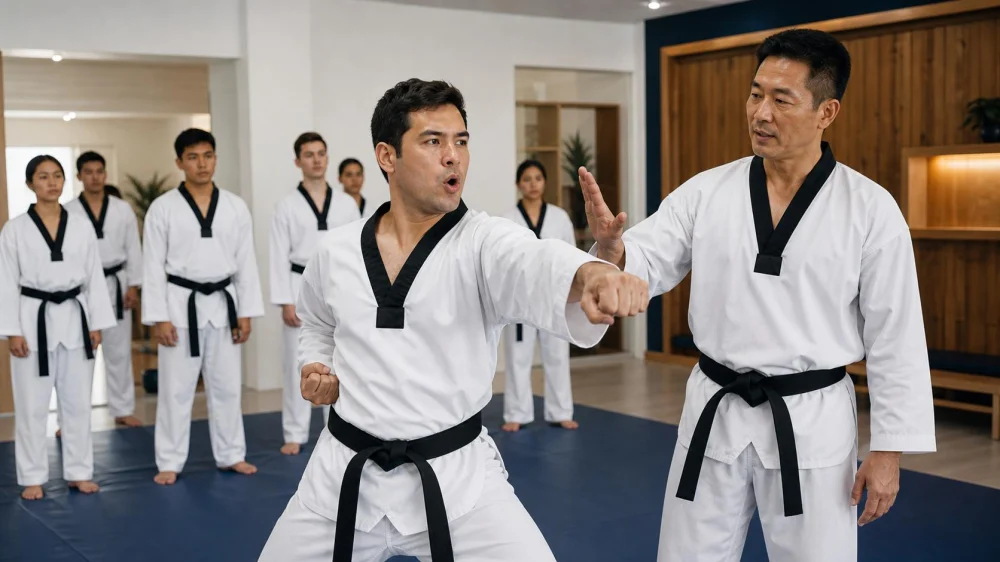
Tae Kwon Do Kihap: Purpose, Timing, and Class Etiquette
Table of contents
Quick answer
A kihap is the focused vocal sound many Tae Kwon Do students use with selected techniques, drills, forms, breaks, or sparring moments. It can reinforce timing, commitment, breathing, and communication, but the exact sound and required moments vary by school and event rules. Do not force a throat shout or hold your breath. Listen to the instructor, use a short supported sound, and ask how kihap is expected in your class.

Paul Prendergast Karate / paul prendergast
Brick TownshipOcean CountyNew Jersey
950 Cedar Bridge Ave, Brick Township, NJ 08723, USA
What a kihap is
The Korean term is often translated as a coordinated or spirited shout, but a kihap is not one required syllable. Students may make a short sound shaped by their natural voice and school tradition. It is usually linked to a deliberate moment rather than continuous yelling. Spelling and pronunciation conventions vary in English, and instructors may explain the concept through breath, focus, energy, rhythm, or martial etiquette.
Franklin Family Taekwondo / franklin family taekwondo
FranklinWilliamson CountyTennessee
454 Downs Blvd #140, Franklin, TN 37064, USA
Why schools use it
In class, a kihap can mark the finish of a technique, help a student avoid passive breath-holding, show decisive intent, and make partner or judge communication clearer. In forms, it may occur at designated movements. During board breaking, it may help organize preparation and commitment. In sparring, vocalization rules and scoring culture depend on the governing system. A loud sound cannot replace balance, control, correct target, or safe technique.
Learn timing from your instructor
Watch the class demonstration and note exactly when the instructor uses or requests kihap. Practice at low speed before adding it to a complex movement. In a form, mark designated moments on your personal notes without adding sounds everywhere. In partner drills, coordinate with the holder or partner so the sound does not surprise them. At a tournament or belt test, use the current event and school requirements rather than assumptions from another dojang.
Voice and breathing basics
Use a brief comfortable sound supported by an ordinary exhalation. Keep the jaw and throat free of strain and return to normal breathing afterward. Do not scream until hoarse, repeatedly hyperventilate, or use vocal force to compensate for fatigue. Stop if you feel throat pain, dizziness, chest symptoms, or unusual shortness of breath. People with voice, respiratory, cardiac, or other health concerns should ask a clinician and instructor about modifications.
Class and event etiquette
Match the volume and frequency modeled by the instructor. Avoid vocalizing during explanation, another student’s quiet form, formal bows, or moments when the school expects silence. Do not mock another person’s sound or treat volume as a rank contest. In shared facilities, instructors may adjust voice level for neighboring activities. Spectators and parents should follow event guidance rather than calling out competing instructions.
Practice checklist
Confirm the school’s preferred term, sound freedom, required form moments, sparring rules, breaking procedure, partner expectations, class volume, and test criteria. Practice one technique slowly with normal breathing, add a short sound, check balance and relaxation, and ask for feedback. Record whether the kihap changed timing or created tension. Keep water available and stop if voice or breathing becomes uncomfortable.
Limits and safety notes
This general U.S. Tae Kwon Do information does not replace instruction, medical advice, or event rules. School traditions, Korean terminology, form standards, and competition requirements differ. Do not use a kihap to intimidate a partner, conceal uncontrolled contact, or push through illness. People with recent surgery, concussion symptoms, breathing issues, voice disorders, pregnancy considerations, or other health limits should obtain individualized clearance and modifications.
Evidence notes
The most reliable evidence for practice is the student’s current curriculum: instructor demonstration, written form notes, belt-test rubric, and applicable tournament rules. Comparing video of the same low-speed technique with and without excessive tension can help identify whether vocalization supports timing or disrupts posture. A consistent, comfortable sound at the required moment is more useful than volume alone.
Frequently asked questions
Is “kihap” a specific word I must shout?
Usually no. Many schools allow a natural short sound, but follow your instructor’s expectations.
Should every kick have a kihap?
Not necessarily. Timing depends on the drill, form, school, and event rules.
Does a louder kihap earn more points?
Volume alone does not replace the technical and rule-based criteria used by judges.
Why do I feel dizzy when practicing it?
Stop and return to normal breathing. Tell the instructor and seek medical guidance for persistent or serious symptoms.
Can children practice kihap?
Yes under age-appropriate instruction, without throat strain, excessive repetition, or pressure to be the loudest.
Next steps
Ask your instructor which moments require kihap, practice a brief comfortable exhaled sound at low speed, and check that posture, control, and breathing remain steady. Match class etiquette and current event rules. Stop for pain, dizziness, chest symptoms, or unusual breathing difficulty, and obtain appropriate medical advice before returning if symptoms persist.


 Kodiak Martial Arts4.0 (4 reviews)
 Topflight Martial Arts4.0 (48 reviews)
 Fort Worth Combatives5.0 (180 reviews)
 Just Taekwondo5.0 (11 reviews)
 Fonseca Martial Arts - Evanston4.0 (59 reviews)
 Southeast Asian Martial Arts Academy (SEAMAA)5.0 (106 reviews)
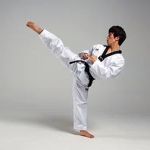 How to Execute a Jumping Roundhouse Kick to the Head
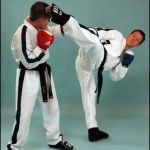 How to Execute a Double Kick Combination in Sparring
 How to Perform a Flawless Axe Kick: A Step-by-Step Guide
 DIY Tae Kwon Do Training Equipment for Home Practice
 How to Increase Your Vertical Jump for Tae Kwon Do Flying Kicks
 The History of the Tae Kwon Do Peace Corps