
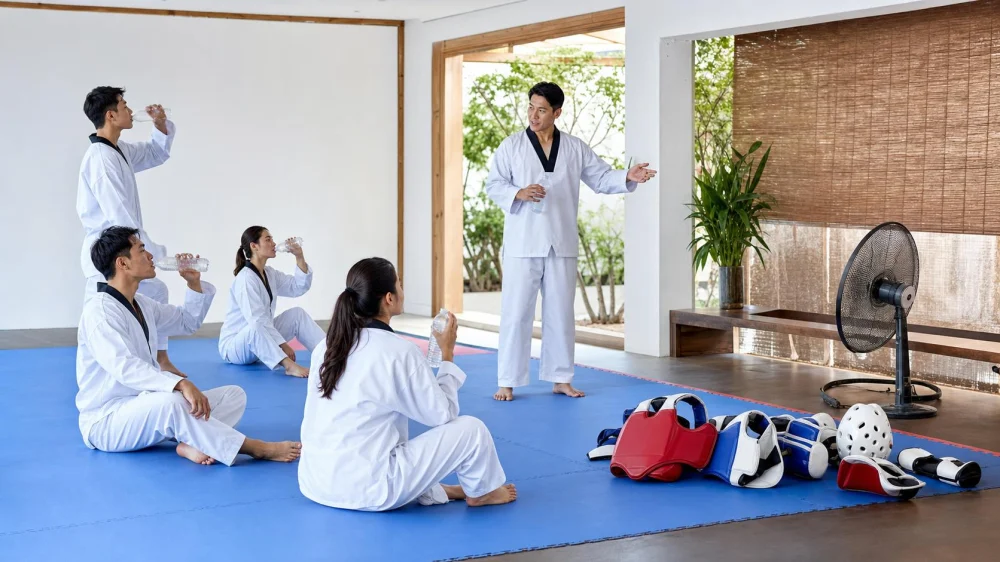
Tae Kwon Do in Hot Weather: Hydration and Break Plan
Table of contents
Quick answer
Hot dojangs, outdoor practice, uniforms, protective gear, and repeated kicking can raise heat strain. Check the forecast and training space, bring accessible water, schedule mandatory breaks before anyone asks, reduce intensity, and use a cool recovery area. Stop immediately for cramps, dizziness, headache, nausea, unusual weakness, or confusion; suspected heat stroke requires emergency help and rapid cooling.
World Champion Taekwondo Brookfield / world champion taekwondo brookfield
BrookfieldWestern Connecticut Planning RegionConnecticut
317 Federal Rd, Brookfield, CT 06804, USA
Why Tae Kwon Do can build heat quickly
Tae Kwon Do sessions can combine warm-ups, forms, pad work, partner drills, and sparring with limited passive time. A dobok and chest protector add layers, while indoor humidity and weak airflow reduce sweat evaporation. Outdoor demonstrations or tests add direct sun and hot surfaces.
The CDC notes that athletes exercising on hot days are more likely to become dehydrated and develop heat-related illness. Risk is not limited to elite competition. Beginners, children, older adults, people returning after a break, and students wearing gear can also overheat. Acclimatization, recent illness, sleep, medicines, and individual health affect tolerance.
Champions Martial Arts Plainview / champions martial arts plainview
PlainviewNassau CountyNew York
10 Washington Ave, Plainview, NY 11803, USA
Before-class checklist
- Check conditions. Review temperature, humidity, heat alerts, air quality, and whether the room's cooling and ventilation are functioning.
- Ask about modifications. Confirm whether class will shorten rounds, reduce gear time, move indoors, add breaks, or cancel under severe conditions.
- Bring a labeled bottle. Use a leakproof container that can be opened quickly without sharing mouthpieces.
- Arrive normally hydrated. Drink regularly through the day rather than trying to consume a large amount at the door.
- Disclose relevant concerns privately. Tell the instructor about recent illness, prior heat illness, pregnancy, or a clinician's activity restrictions.
- Wear the required uniform only. Avoid unnecessary layers and ask when protective gear can be removed between drills.
- Know the emergency plan. Locate exits, a cool recovery area, first-aid supplies, and the address emergency responders would need.
Hydration and break plan during class
Do not make water breaks a reward or wait for the first student to look ill. OSHA's heat guidance—written for work but useful as a planning principle—emphasizes water, rest, and a cool or shaded recovery place, with more frequent or longer breaks as heat stress increases.
- Set water breaks in the lesson plan and announce them before class starts.
- Keep bottles close enough that students can drink without crossing active drill lanes.
- Use shorter rounds, lower target height, more technical practice, and longer recovery.
- Limit continuous time in chest protectors, helmets, and other heat-trapping gear.
- Rotate partners and watch for declining coordination, unusually slow responses, or behavior change.
- Allow any student to stop without punishment or embarrassment.
- Move breaks to air conditioning, shade, or a cooler zone rather than the edge of the same hot mat.
Water is appropriate for many ordinary sessions. Long, intense exercise with heavy sweating may require a different fluid and electrolyte plan, but personal health conditions can change what is safe. Avoid energy drinks as a substitute for hydration, and never share bottles.
Warning signs and emergency action
Stop activity and cool down
Muscle cramps, heavy sweating, headache, dizziness, nausea, weakness, faintness, or unusual fatigue can signal heat illness. Stop training, move to a cool place, loosen or remove unnecessary gear, and begin cooling. Sip water if the person is awake, able to swallow, and not suspected of heat stroke. Obtain medical help if symptoms worsen, vomiting occurs, or recovery is not prompt.
Treat possible heat stroke as an emergency
Confusion, altered behavior, slurred speech, collapse, seizure, loss of consciousness, or very high body temperature can indicate heat stroke. Call 911 in the United States, move the person to a cooler place, remove excess equipment, and start rapid cooling while help is coming. Do not force fluids into a confused or unconscious person.
Do not send a symptomatic student home alone or allow them to “push through” a belt test. Another responsible adult should monitor the person until care is transferred.
Questions for instructors and event hosts
- Who monitors indoor and outdoor conditions, and what triggers modification or cancellation?
- How often are mandatory breaks scheduled for this session?
- Where is the coolest recovery area?
- Who is trained in first aid and how will emergency services be called?
- Is there a rapid-cooling method and enough ice or cool water?
- How are minors released to a parent or guardian after symptoms?
- Can a belt test or tournament round be stopped without penalty for a health concern?
- How are students returning after illness or time away eased back into heat?
Limits and individual medical needs
This article is general safety education, not a personal hydration prescription or medical clearance. Fluid needs vary with body size, sweat rate, duration, environment, diet, medicines, kidney or heart conditions, and other factors. Too much fluid can also be dangerous.
People with chronic conditions, pregnancy, prior heat stroke, or medicines affecting heat response should ask a clinician for an individualized plan. After significant heat illness, follow medical return-to-activity guidance rather than returning at the next class automatically.
Frequently asked questions
Should students wait until they feel thirsty?
No. Thirst can lag behind need during heat and intense exercise. Provide routine opportunities to drink and never restrict water as discipline.
Does training indoors eliminate heat risk?
No. A crowded room with humidity, weak airflow, sun through windows, or failed air conditioning can become hot. Uniforms, gear, and exertion still add heat.
Are sports drinks always better than water?
No. Water is suitable for many ordinary classes. Longer or unusually sweaty sessions may warrant electrolyte planning, but sugar, sodium, medical needs, and total intake matter. Seek qualified guidance for individualized needs.
Can a student resume once dizziness stops?
Do not rush back. Heat symptoms warrant rest, cooling, observation, and assessment. CDC guidance advises stopping activity; severe or persistent symptoms need medical care, and heat stroke needs emergency treatment.
Sources and evidence
- Centers for Disease Control and Prevention: Heat and Athletes — athletic heat risk and hydration guidance.
- Centers for Disease Control and Prevention: Heat-Related Illnesses — warning signs and first actions.
- Occupational Safety and Health Administration: Water, Rest, Shade — structured hydration and recovery principles.
- CDC/NIOSH: Acclimatization — gradual adaptation and loss of heat tolerance after time away.
Conclusion and next steps
Build heat safety into the class plan before the first bow: verify conditions, stage water, schedule breaks, reduce intensity, and designate a cool recovery area. Make stopping normal and penalty-free. When coordination, behavior, or consciousness changes, treat it as a medical warning—not a motivation problem—and activate emergency care.
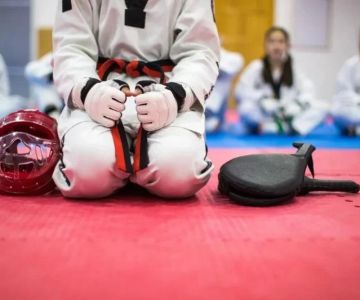
 Sunshine Taekwondo Academy4.0 (11 reviews)
 North Side Brazilian Jiu Jitsu4.0 (57 reviews)
 Titan Jujitsu5.0 (12 reviews)
 Sunrise Taekwondo Academy4.0 (23 reviews)
 Major Academy Martial Arts5.0 (84 reviews)
 Team K2 Karate5.0 (47 reviews)
 How to Execute a Jumping Roundhouse Kick to the Head
 How to Execute a Double Kick Combination in Sparring
 How to Perform a Flawless Axe Kick: A Step-by-Step Guide
 DIY Tae Kwon Do Training Equipment for Home Practice
 How to Increase Your Vertical Jump for Tae Kwon Do Flying Kicks
 The History of the Tae Kwon Do Peace Corps