
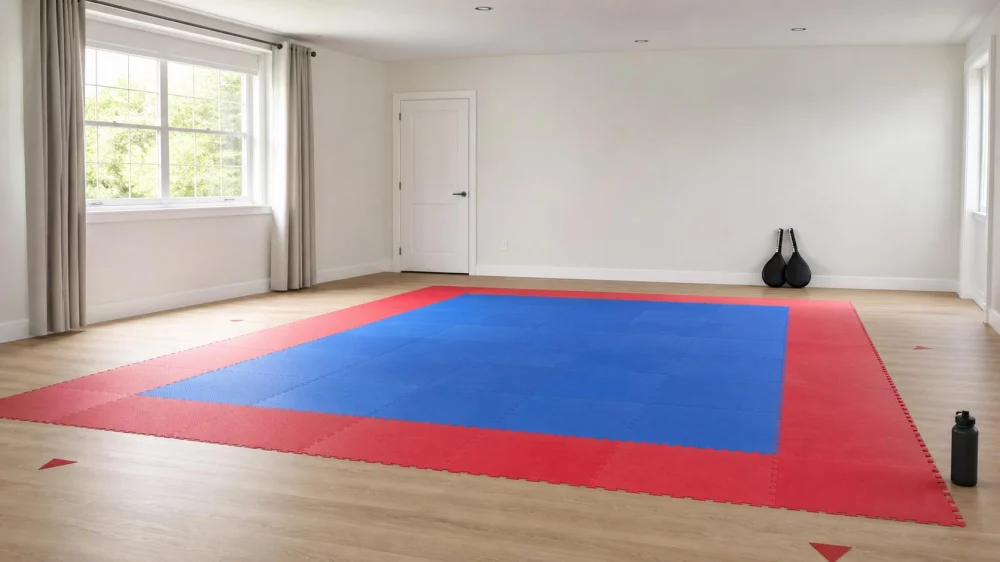
Tae Kwon Do Home Practice Space Safety Checklist
On this page
- Quick answer
- Choose a suitable practice area
- Inspect the floor and landing surface
- Create safe horizontal and overhead clearance
- Use home training equipment conservatively
- Limit the practice plan to known skills
- Supervise children and protect shared spaces
- Prepare for symptoms and emergencies
- Limits of home practice
- Frequently asked questions
- Conclusion and room checklist
Quick answer
Practice Tae Kwon Do at home only in a dry, level, well-lit area with a suitable non-slip surface and generous clearance from people, pets, glass, furniture, ceiling fixtures, and electronics. Mark a no-entry boundary, inspect the floor before every session, and perform only low-risk skills already taught by a qualified instructor. Do not spar, break objects, attempt acrobatics, or use hanging equipment without approved supervision and installation.

Motivate Martial Arts / motivate martial arts monroe ga
768 W Spring St, Monroe, GA 30655, USA
Choose a suitable practice area
A room that feels large while standing still may become too small once arms and legs move quickly. Evaluate the space for the exact drill, athlete height, direction changes, and possible loss of balance.
A better home practice area has:
- A level, clean, dry surface
- Bright, even lighting without glare
- Ventilation and a comfortable temperature
- A door or boundary that keeps others from entering unexpectedly
- Enough space to stop before every wall or obstacle
- A nearby phone and clear exit path
Garages, basements, patios, and yards need additional checks for vehicles, tools, oil, concrete, steps, roots, holes, weather, pests, and low beams. Never practice where a moving car, garage door, pool, stove, fireplace, or active work area creates another hazard.

Inspect the floor and landing surface
Footwork requires predictable grip. A surface that is too slippery can cause a fall, while one that grips the foot abruptly can stress an ankle or knee during a pivot.
- Sweep or vacuum dust, grit, hair, and small objects.
- Dry moisture and identify leaks before starting.
- Remove loose rugs, curled edges, cables, and shifting pads.
- Check interlocking mats for separated seams and raised corners.
- Confirm the mat system is intended for athletic use and installed according to its instructions.
- Wear the footwear or bare-foot condition required by the instructor and suitable for the surface.
A thin exercise mat or carpet is not automatically a safe martial-arts floor and does not make throws, falls, jumps, or acrobatics appropriate at home. Concrete beneath a soft-looking rug can still create serious impact risk.
Create safe horizontal and overhead clearance
Remove rather than merely move obstacles to the edge. A stumble often travels beyond the planned drill area.
- Move tables, chairs, lamps, weights, toys, plants, and sharp decor out of the room.
- Protect or avoid windows, mirrors, glass doors, and display cabinets.
- Check ceiling fans, lights, sprinklers, beams, garage tracks, and hanging storage.
- Close drawers and cabinet doors.
- Route cords completely outside the practice boundary.
- Keep the doorway and emergency exit unobstructed.
Stand at the center and slowly extend each limb in every planned direction. Then account for stepping, turning, and an extra margin for error. If the space only works when every motion is perfect, it is too small for that drill.
Use home training equipment conservatively
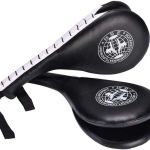
Handheld target pads
A trained adult holder should understand positioning, intensity, and when to stop. The holder must not place a target near their face, joints, or an obstacle. Children should not improvise target games without instructor-approved adult supervision.
Freestanding bags
Follow the product instructions for base fill, floor compatibility, clearance, height, inspection, and use. A sliding or tipping base can strike people or damage the room. Stop if the shell, stitching, stem, or base is damaged.
Hanging bags
Do not attach a bag to a ceiling, wall, door frame, tree, or rental property without confirmation from a qualified installer and the building owner where required. Dynamic loads can exceed the bag's static weight. Maintain clearance for the full swing path.
Boards and breaking materials
Breaking creates projectile, cut, joint, and property risks. It belongs in an instructor-controlled setting with suitable materials, holders, spacing, and progression—not an improvised living room setup.
Limit the practice plan to known skills
Home sessions work best for low-intensity repetition of skills already taught in class. Examples may include posture, slow chamber positions, basic stances, controlled patterns, balance, terminology, and instructor-assigned conditioning.
Before starting:
- Write a short plan with a clear time limit.
- Warm up as the instructor has taught.
- Begin slowly and stay well below maximum speed or force.
- Use a mirror or recording only if it does not reduce space or privacy.
- Stop when technique deteriorates or fatigue changes balance.
- Save questions for the next supervised class.
Do not learn head-contact drills, joint locks, throws, weapons, flips, high-risk jumps, or partner sparring from short online videos. A camera angle cannot show every hazard or adapt instruction to the athlete.
Supervise children and protect shared spaces
An adult should control the practice boundary, equipment, duration, and instructions. Siblings and friends should not act as sparring partners or targets unless a qualified instructor has specifically structured and supervised the drill.
- Tell everyone in the home when practice begins and ends.
- Keep pets behind a secure door, not just verbally called away.
- Store pads and heavy equipment where children cannot pull them down.
- Do not post a child's practice video publicly without considering privacy and safeguarding.
- Use respectful coaching; do not punish mistakes with excessive exercise.
- Stop if the child is distressed, afraid, ill, injured, or unable to follow the boundary.
World Taekwondo's Safeguarding Policy describes an athlete-centered, respectful environment free from harassment and abuse. Those principles matter during home practice as well as organized events.
Prepare for symptoms and emergencies
Keep a phone accessible, know the exact address, and make sure another person knows when a solo session is underway. Have water available and avoid practicing when illness, medication effects, extreme heat, or fatigue makes balance or judgment unreliable.
Stop immediately for:
- Chest pain or pressure
- Fainting, severe dizziness, or sudden weakness
- Severe breathing difficulty
- Head impact or suspected concussion
- Sharp pain, joint instability, new numbness, or inability to bear weight
- A fall involving the head, neck, or back
Seek urgent medical help for emergency symptoms. Do not resume because discomfort fades after a few minutes.
Limits of home practice
This article provides general space-safety education, not individualized coaching, structural advice, equipment installation, or medical care. Your instructor, lease, building rules, insurance, manufacturer instructions, and local law may impose additional requirements.
Home practice cannot replace live correction, matched partners, appropriate mats, formal progression, first-aid planning, and safeguarding procedures at a responsible school. Do not use an empty room as permission to attempt a skill that has not been cleared for independent practice.
Frequently asked questions
How much space do I need?
There is no single room size for every athlete and drill. You need the full motion path plus a generous error margin in every direction and overhead. Ask the instructor to approve the planned drill.
Can I practice kicks near a wall?
Only slow, instructor-approved positioning work may be suitable, and the wall should not be used as an improvised target. Fast kicks need space for movement and loss of balance.
Are puzzle mats safe for Tae Kwon Do?
Some mat systems are designed for martial arts, but thickness, grip, seams, subfloor, installation, and drill type matter. Follow the manufacturer and instructor guidance.
Can two beginners hold pads for each other?
Not without a structured instructor-approved drill and competent supervision. Poor target position can expose the holder's face, fingers, joints, and balance.
Should I practice in socks?
Socks can be slippery on many floors. Follow instructor guidance and choose a surface and foot condition that provide predictable grip without abrupt sticking.
Conclusion and room checklist
Use a dry level floor, remove obstacles, check overhead clearance, control entry, inspect equipment, and practice only known low-risk skills. Keep children and pets protected, prepare for emergencies, and stop for symptoms or unsafe conditions. The room should fit the drill with room for error—not merely fit a person standing still.
 Premier Martial Arts Swampscott5.0 (70 reviews)
 1802 Jiu-Jitsu5.0 (31 reviews)
 White Dragon Judo4.0 (47 reviews)
 Steele Creek Martial Arts5.0 (12 reviews)
 South Bay Shotokan4.0 (5 reviews)
 ATA Martial Arts- St. Peters4.0 (20 reviews)
 How to Execute a Jumping Roundhouse Kick to the Head
 How to Execute a Double Kick Combination in Sparring
 How to Perform a Flawless Axe Kick: A Step-by-Step Guide
 DIY Tae Kwon Do Training Equipment for Home Practice
 How to Increase Your Vertical Jump for Tae Kwon Do Flying Kicks
 The History of the Tae Kwon Do Peace Corps