
Tae Kwon Do Head Impact: Stop and Check for Concussion
On this page
- Quick answer
- A concussion can follow a body hit too
- Watch for signs and reported symptoms
- Know the emergency danger signs
- What instructors should do immediately
- Continue monitoring for delayed symptoms
- Return requires medical clearance and progression
- Build a reporting culture in the dojang
- Head-impact response checklist
- Frequently asked questions
- Sources and evidence notes
- Conclusion and next steps
Quick answer
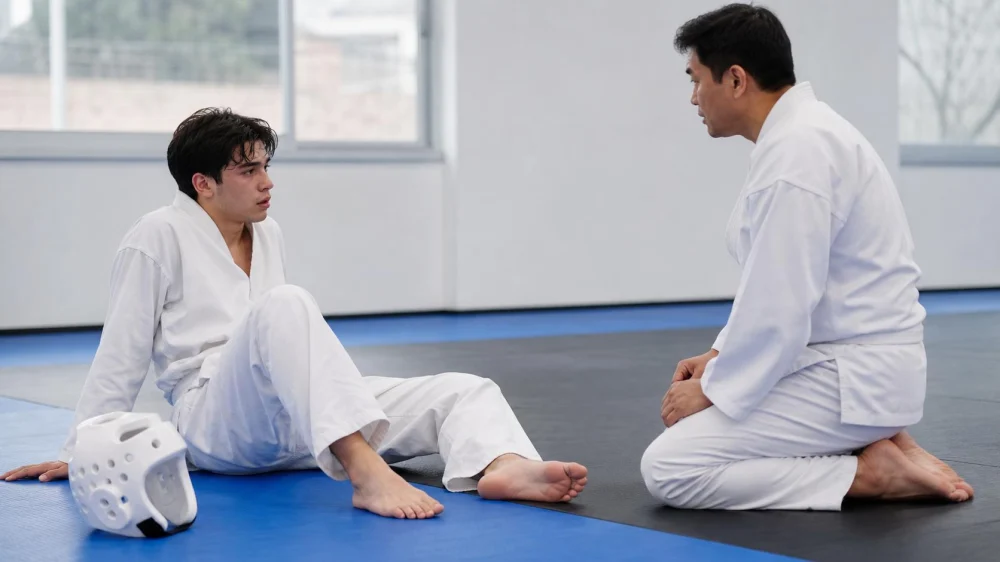
After a kick, fall, collision, or blow that may have moved the head or brain, stop the Tae Kwon Do activity immediately if concussion is suspected. Remove the athlete from sparring, pad work, breaking, forms, and conditioning. Check for emergency danger signs, arrange evaluation by a healthcare provider, and do not allow a same-day return.
The CDC says coaches should not judge concussion severity themselves. An athlete with possible concussion stays out the day of injury and until a healthcare provider clears a structured return to sport. Feeling better after a few minutes is not clearance.

Budo Martial Arts Studio / budo martial arts studio
Ewing TownshipMercer CountyNew Jersey
9 Scotch Rd, Ewing Township, NJ 08628, USA
A concussion can follow a body hit too
A concussion is a traumatic brain injury caused by a bump, blow, or jolt to the head or by a body hit that makes the head and brain move rapidly. Direct head contact is not required. A hard fall to the mat, body collision, or sudden whiplash-type movement can also raise concern.
Protective headgear can help with some impacts but does not make concussion impossible. Do not use the presence of headgear, lack of loss of consciousness, or a clean-looking uniform to rule out injury.

Champions Martial Arts Plainview / champions martial arts plainview
PlainviewNassau CountyNew York
10 Washington Ave, Plainview, NY 11803, USA
Watch for signs and reported symptoms
Possible symptoms include headache, dizziness, balance difficulty, nausea, vision problems, sensitivity to light or noise, fatigue, feeling foggy, slowed thinking, concentration or memory problems, irritability, anxiety, sadness, and sleep changes.
Observable signs may include appearing dazed, answering slowly, forgetting instructions or events, moving clumsily, losing balance, behavior change, or vomiting. Symptoms can differ by age and may not appear immediately.
Ask simple neutral questions and listen. Do not pressure the athlete to minimize symptoms to finish a round, test, or tournament.
Know the emergency danger signs
Call 911 or go to the nearest emergency department for CDC danger signs after a head or body impact, including seizures, inability to recognize people or places, repeated vomiting, increasing confusion or agitation, inability to wake or stay awake, slurred speech, weakness or numbness, decreased coordination, a worsening headache that does not go away, one pupil larger than the other, or double vision.
Follow emergency-dispatch instructions. Do not move an athlete with possible neck or spine injury unless required for immediate safety, and do not give food, drink, or medicine unless directed by qualified personnel.
What instructors should do immediately
- Stop the drill and protect the athlete from another hit.
- Activate the school’s emergency action plan.
- Check for danger signs and call emergency services when present.
- Notify the parent or guardian for a minor.
- Arrange evaluation by a healthcare provider.
- Record the time, mechanism, observed signs, reported symptoms, and actions taken.
- Keep all sparring and other injury-risk activity off the schedule.
A coach, referee, parent, or teammate does not clear the athlete medically. When doubt exists, remove from play.
Continue monitoring for delayed symptoms
CDC notes that concussion signs and symptoms can take hours or days to appear. Give the responsible adult a written summary of the impact and observed condition, plus the official danger-sign list and contact instructions.
Changes in schoolwork, screen tolerance, sleep, mood, balance, headache, or energy after class should be reported to the healthcare provider. Worsening danger signs require emergency care, even if the athlete looked well at the dojang.
Return requires medical clearance and progression
Return to Tae Kwon Do should follow the healthcare provider’s approval and a staged progression. CDC’s return-to-sport sequence advances step by step, typically with at least 24 hours per step. New or returning symptoms mean the athlete stops and contacts the provider.
Progression may begin with regular non-sport activities, then light aerobic work, moderate activity, heavier non-contact training, controlled practice, and competition only when authorized. The exact sequence should reflect the provider’s plan, school rules, age, and applicable concussion law.
Build a reporting culture in the dojang
Teach students that reporting headache, dizziness, confusion, or vision change protects their training future. Praise honest reporting. Do not call symptoms weakness, punish withdrawal, or let rank testing and tournament fees influence safety decisions.
Before the season, post the emergency plan, verify contacts, train staff, and review state and league concussion requirements. Ensure substitute instructors know the same process.
Head-impact response checklist
- Stop the activity immediately when concussion is suspected.
- Prevent another hit or fall.
- Check CDC danger signs.
- Call 911 for any danger sign.
- Arrange healthcare-provider evaluation.
- No same-day return to Tae Kwon Do.
- Notify the responsible adult and document the event.
- Monitor for delayed symptoms.
- Use medical clearance and a staged return.
Frequently asked questions
Must the athlete black out to have a concussion?
No. Loss of consciousness is not required.
Can a body kick cause concussion?
Yes, if it makes the head and brain move rapidly.
Can the student return if symptoms stop in ten minutes?
No. CDC says no same-day return when concussion is suspected and requires healthcare-provider clearance.
Does headgear prevent concussion?
It cannot eliminate concussion risk and should never be used to clear an athlete after symptoms.
Should the athlete be kept awake?
Follow the healthcare provider’s instructions. CDC advises not preventing normal sleep during recovery absent other directions.
Who decides return to sparring?
A qualified healthcare provider directs medical return, with the school applying its safety and policy requirements.
Sources and evidence notes
CDC HEADS UP guidance on responding to sports-related concussion says to remove the athlete immediately, check danger signs, prevent same-day return, and obtain healthcare-provider clearance. The CDC’s signs and symptoms page lists symptoms and emergency danger signs.
This is recognition and response education, not diagnosis. Follow applicable state concussion law, sport rules, and medical instructions.
Conclusion and next steps
After a concerning head or body impact, stop first and assess second. Remove the athlete, check danger signs, arrange medical evaluation, and document the event. No belt test, round, or tournament justifies a same-day return; use provider clearance and a staged progression before contact resumes.
 Aikido of San Jose4.0 (7 reviews)
 Nikko Jujitsu School4.0 (9 reviews)
 Gracie Barra San Clemente Martial Arts4.0 (47 reviews)
 Karate Institute of America4.0 (4 reviews)
 Keweenaw Korean Martial Arts0.0 (0 reviews)
 Wing Chun School of Internal Arts5.0 (6 reviews)
 How to Execute a Jumping Roundhouse Kick to the Head
 How to Execute a Double Kick Combination in Sparring
 How to Perform a Flawless Axe Kick: A Step-by-Step Guide
 DIY Tae Kwon Do Training Equipment for Home Practice
 How to Increase Your Vertical Jump for Tae Kwon Do Flying Kicks
 The History of the Tae Kwon Do Peace Corps