
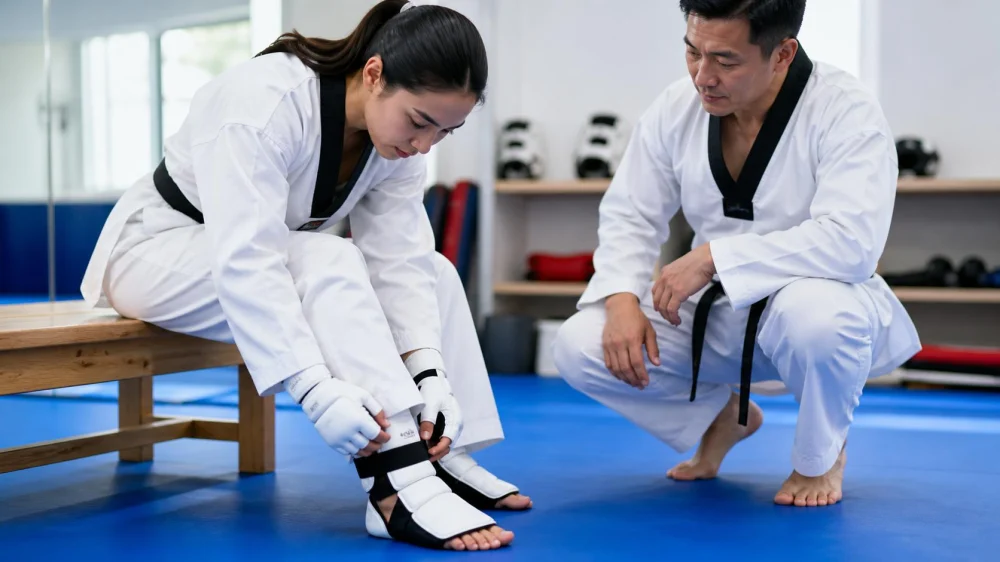
Tae Kwon Do Foot Protector Fit: Toes, Straps, and Grip
On this page
Quick answer
Tae Kwon Do foot protectors should match the school or event rules, cover the intended striking areas, secure without cutting circulation, and remain stable through stance changes and light kicking. Check toe openings, heel position, seams, straps, hook-and-loop closures, padding, and sole grip before training. Stop if the protector twists, slips, exposes a sharp edge, causes numbness, or changes safe contact.
Foot protectors do not replace controlled technique, partner agreement, mat clearance, or instructor supervision.
Budo Martial Arts Studio / budo martial arts studio
Ewing TownshipMercer CountyNew Jersey
9 Scotch Rd, Ewing Township, NJ 08628, USA
Confirm the required style
- Whether foot protectors are required, optional, or prohibited for the activity
- Approved color, coverage, padding, and fastening design
- Electronic scoring-system compatibility where applicable
- Whether socks may be worn underneath
- Equipment check and labeling procedures
- Division-specific tournament requirements
Do not assume kickboxing, karate, or general martial arts footwear meets Tae Kwon Do school or tournament rules. Confirm current written requirements before buying.
Champions Martial Arts Plainview / champions martial arts plainview
PlainviewNassau CountyNew York
10 Washington Ave, Plainview, NY 11803, USA
Check the fit
- Use the maker’s size chart and measure both feet as directed.
- Seat the heel fully in the intended position.
- Align padding over the areas the design is meant to protect.
- Check that toes are not forced together, curled, or excessively exposed.
- Fasten straps flat without folds or excessive tension.
- Confirm closures do not contact or scratch a partner.
- Stand and check for pressure, numbness, slipping, or bunching.
Feet can differ in size. Fit the larger or more difficult foot appropriately and ask the instructor or retailer about model options.
Test movement gradually
Start with walking, stance changes, and controlled pivots on the dojang mat. Progress to slow chambering and light non-contact technique. The protector should track the foot without rotating, catching the mat, or changing balance.
Do not begin full-speed sparring with new gear. Different sole materials and padding can change friction, distance, and sensory feedback. Let the instructor observe before contact.
Inspect before class
- Torn fabric, split seams, or exposed foam
- Loose threads that can catch toes
- Worn, detached, or contaminated closures
- Hardened, compressed, shifted, or missing padding
- Sharp labels, cracked plastic, or rough edges
- Smooth, oily, wet, or dirty sole areas
- Odor or dampness that persists after approved cleaning
Check the mat too. Even a sound protector can slip on wet, dusty, lifted, or damaged flooring.
Clean and dry
Follow the manufacturer’s cleaning instructions after each session. Wipe or hand wash only as allowed, remove surface sweat, and open straps for airflow. Dry completely away from direct heat, which can warp foam, weaken adhesives, or damage elastic.
Store the pair in a breathable section of the gear bag after drying. Keep them separate from a wet dobok, used towel, and mouthguard. Do not share foot protectors without an approved hygiene process.
When to stop using it
Stop using a protector that no longer stays aligned, has failed closures, exposed internal material, sharp damage, hardened padding, lost grip, or a fit changed by growth or injury. Do not tape over a failure for sparring unless the instructor and rules specifically approve a temporary measure.
Report pain, swelling, numbness, skin breakdown, or injury and follow appropriate medical guidance before returning to contact.
Frequently asked questions
Should foot protectors feel tight?
They should be secure without pain, numbness, color change, or restricted movement.
Can I wear socks under them?
Only if the product, school, mat rules, and event rules allow it.
Why does the protector rotate during kicks?
Size, fastening, stretch, damage, or model shape may be involved. Stop and refit or replace it.
Can I wash them in a machine?
Use only the manufacturer-approved method; machines can damage padding and closures.
Do electronic foot protectors fit differently?
They may have system-specific construction and rules. Use the specified model and fitting guidance.
Sources and evidence notes
This guide applies protective-equipment fit, retention, surface-friction, inspection, and hygiene principles. Exact coverage and approval requirements depend on the school, tournament organization, scoring system, product, and division.
Use current event rules, manufacturer instructions, and instructor inspection for the athlete and activity.
Conclusion and next steps
Confirm the permitted model, measure carefully, and inspect each strap and contact surface. Test walking, pivots, and slow techniques before adding speed or a partner. Clean and dry the pair after class, and replace damaged or unstable gear instead of tightening it until it hurts or relying on tape to hold it together.
 Aikido of San Jose4.0 (7 reviews)
 Nikko Jujitsu School4.0 (9 reviews)
 Gracie Barra San Clemente Martial Arts4.0 (47 reviews)
 Karate Institute of America4.0 (4 reviews)
 Keweenaw Korean Martial Arts0.0 (0 reviews)
 Wing Chun School of Internal Arts5.0 (6 reviews)
 How to Execute a Jumping Roundhouse Kick to the Head
 How to Execute a Double Kick Combination in Sparring
 How to Perform a Flawless Axe Kick: A Step-by-Step Guide
 DIY Tae Kwon Do Training Equipment for Home Practice
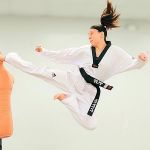 How to Increase Your Vertical Jump for Tae Kwon Do Flying Kicks
 The History of the Tae Kwon Do Peace Corps