
Tae Kwon Do Dobok Care: Wash, Dry, and Pack It for Class
On this page
Quick answer
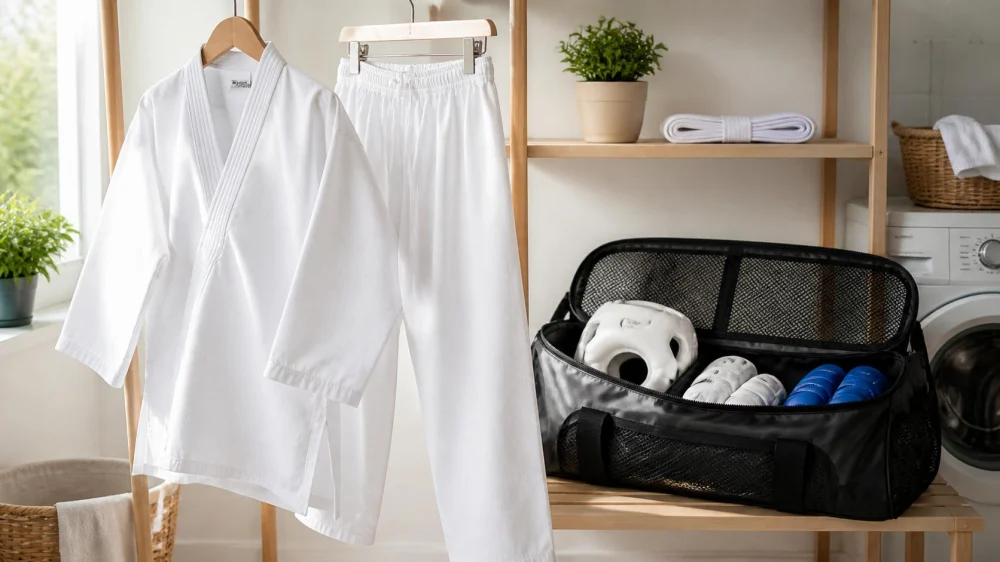
Care for a Tae Kwon Do dobok by following its fabric label and your school's uniform rules. After class, remove it from the bag promptly, inspect seams and closures, wash it with compatible colours and mild products, and dry it fully before folding. Keep clean uniforms separated from wet towels, shoes, and protective gear. Ask the instructor whether and how the belt should be washed because traditions and material instructions vary.
Do not use fragrance or fabric treatments that irritate skin, damage prints or patches, or leave a slippery residue. Replace a uniform that tears, restricts movement, or cannot be cleaned safely.
Check the uniform and school rules
Doboks vary by cotton or synthetic blend, weight, colour, neckline, printing, embroidery, and patches. Read the care label before the first wash and photograph it for reference. Ask the school about approved uniform colour, insignia, alterations, and belt care.
- Confirm water temperature and drying method.
- Check whether coloured trim can bleed.
- Ask before using bleach or whitening products.
- Note patches, heat transfers, hook-and-loop closures, and embroidery.
- Keep a spare uniform only if the school permits it.
Handle the dobok after class
Do not leave a damp uniform compressed in a closed bag or car. Take it out promptly and hang it in a ventilated laundry area until it can be washed. Keep it away from food preparation surfaces and shared household items.
Check underarms, collar, cuffs, knees, crotch seams, ties, snaps, and patches. Small damage is easier to repair before it grows during kicks, stances, or partner drills.

Lead By Example Tae Kwon Do / lead by example tae kwon do
11226 Waples Mill Rd, Fairfax, VA 22030, USA
Wash without hiding stains or damage
- Close fasteners that could snag fabric.
- Turn the garment as recommended to protect prints or embroidery.
- Use the label's cycle, temperature, and detergent guidance.
- Avoid overloading the machine so the uniform can rinse.
- Inspect stains after washing before applying dryer heat.
- Clean the laundry container or bag if it holds sweaty gear.
Do not mix cleaning chemicals. For blood or body-fluid contamination, follow the school's and applicable hygiene guidance rather than relying on an ordinary stain trick.
Dry completely before packing
Air drying can reduce heat stress on some fabrics and prints, while some uniforms allow machine drying. Use the label. Shape the collar and seams while damp, provide airflow, and wait until thick folds and waist areas are fully dry.
Do not pack a uniform that feels cool-damp or smells musty. Avoid direct high heat unless approved because it can shrink fabric or damage transfers.
Build a clean gear routine
Use separate breathable compartments or washable pouches for clean clothing, used clothing, shoes, towels, and protective gear. Pack the dry dobok, belt, required safety gear, water bottle, and school-specific items. Remove everything after class.
Before leaving for training, check the uniform fits through high steps, deep stances, arm extension, and sitting without pulling or exposing damaged seams.
Important limitations
This is general uniform-care information. Manufacturer labels, school customs, competition rules, fabric, patches, skin sensitivities, and contamination procedures vary. The uniform maker, instructor, and applicable event rules are the primary sources for a specific dobok.
Evidence notes
The routine controls moisture, soil transfer, fabric damage, and forgotten gear. Prompt unpacking, compatible washing, complete drying, inspection, and separated packing preserve function better than masking odour with fragrance.
FAQ
Should I wash my belt?
Ask your school and check the belt material. Traditions and care needs vary.
Can I use bleach on a white dobok?
Only if the care label permits it and it will not damage trim, patches, or fibres.
Why did my dobok shrink?
Heat, fabric, and construction matter. Follow the label and check fit before class.
Can I leave it in my gear bag overnight?
No. Remove damp items promptly for washing and drying.
How many uniforms do I need?
It depends on training frequency, laundry timing, school rules, and budget.
Next steps
Photograph the care label, ask the school about belt and patch rules, set up separate clean and used gear pouches, and make unpacking the first task after every class.
 Krav Maga Minneapolis LLC4.0 (37 reviews)
 Pure Mixed Martial Arts4.0 (152 reviews)
 5280 Karate Academy Foundation4.0 (18 reviews)
 Han’s Martial Arts4.0 (53 reviews)
 Kuk Sool Won of Madison Heights4.0 (10 reviews)
 Parks Taekwondo Federation4.0 (189 reviews)
 How to Execute a Jumping Roundhouse Kick to the Head
 How to Execute a Double Kick Combination in Sparring
 How to Perform a Flawless Axe Kick: A Step-by-Step Guide
 DIY Tae Kwon Do Training Equipment for Home Practice
 How to Increase Your Vertical Jump for Tae Kwon Do Flying Kicks
 The History of the Tae Kwon Do Peace Corps