
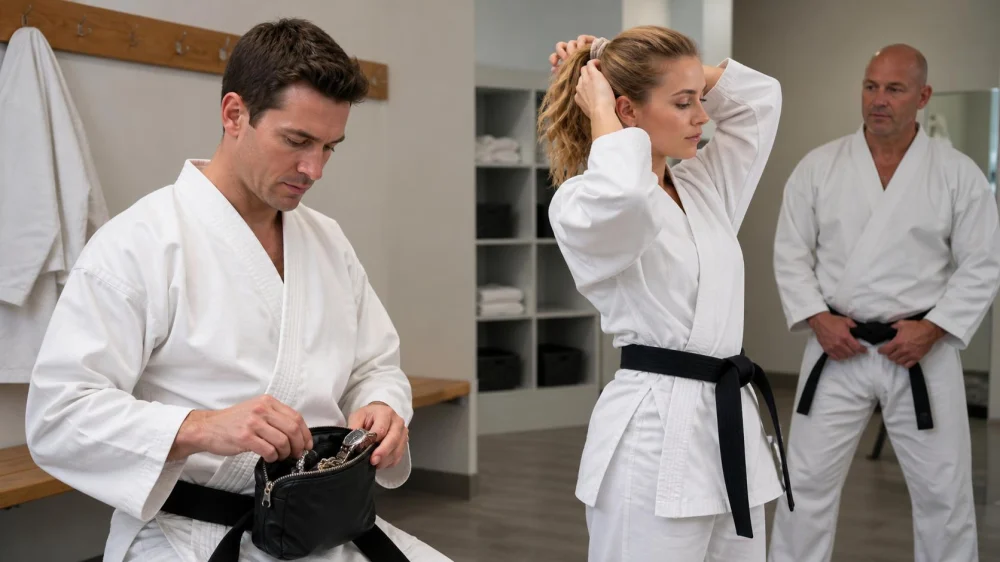
Tae Kwon Do Class Prep: Jewellery, Nails, Hair, and Small Items
Small personal items can become large problems during fast Tae Kwon Do movement. Earrings can catch, rings can injure a partner, long nails can scratch, and loose hair accessories can fall onto the mat. Preparing before class protects the wearer, partners, and floor while respecting the school’s uniform and cultural policies.
Check the School Policy
Ask what must be removed for warm-up, forms, pad work, sparring, and testing. Rules may differ by age, governing organization, tournament, or activity. Religious, cultural, medical, and accessibility needs should be discussed privately with the instructor early. Do not invent a cover or exception at the mat edge without approval.
Budo Martial Arts Studio / budo martial arts studio
Ewing TownshipMercer CountyNew Jersey
9 Scotch Rd, Ewing Township, NJ 08628, USA
Remove Jewellery Early
Take off rings, bracelets, watches, necklaces, anklets, dangling or stud earrings, and decorative pins before changing into the uniform when school rules require it. Smooth objects can still catch skin, cloth, pads, or hair. Do not ask a partner to work around jewellery. Check for hidden toe rings or body jewellery relevant to protective gear.
Champions Martial Arts Plainview / champions martial arts plainview
PlainviewNassau CountyNew York
10 Washington Ave, Plainview, NY 11803, USA
Plan for New Piercings
A fresh piercing may not be removable safely during healing, but leaving it in can conflict with contact training. Speak with the instructor and a qualified healthcare or piercing professional before class. Options may include modifying activity or waiting, not taping over it without guidance. Tape can loosen, trap moisture, or fail during contact.
Trim and Check Nails
Keep fingernails and toenails at a length and shape that do not extend as sharp edges. File rough corners and inspect for splits. Do not train barefoot with an actively bleeding or infected nail area. Covering a minor issue must follow school hygiene and medical guidance. Artificial nails may need special planning because they can break or scratch.
Secure Hair Simply
Tie long hair so it does not cover the eyes, catch a partner, or interfere with headgear. Use soft, secure accessories approved by the school. Avoid rigid clips, metal pins, sharp beads, and decorative pieces that can press into the scalp or fall onto the floor. Test head movement and protective-equipment fit before drills start.
Discuss Medical Devices
Do not remove a medically necessary device solely to follow a general jewellery rule. Discuss hearing devices, glucose monitors, insulin pumps, medical alert identification, braces, prostheses, and other equipment with the instructor and healthcare professional. Agree on protection, activity modification, emergency access, and who may assist. Preserve the device’s function and the person’s privacy.
Empty Pockets
Remove keys, coins, phones, earbuds, pens, tissues, and small cases from dobok or warm-up clothing. Objects can strike the wearer, a partner, or the floor and may damage equipment. Check hidden zip pockets and waistbands. Never carry medication loose; store it under the school’s accessible emergency plan and label it appropriately.
Store Items Securely
Use a designated locker, sealed pouch, or supervised storage process. Photograph valuable items or leave them at home. Do not place jewellery in shoes at the mat edge, where it can spill or be forgotten. Keep keys and identification separate from the public training area. Follow facility lock and lost-property rules.
Check Before Contact
Before partner drills, each person can perform a quick self-check: hair secure, nails safe, pockets empty, uniform closed, and approved devices protected. Do not inspect or touch another person without consent. Tell the instructor privately if you notice a sharp object or unsafe accessory. The instructor decides whether activity changes are required.
Inspect After Class
Check hands, feet, ears, hair, devices, and skin for scratches, breakage, or lost items. Clean any minor wound according to first-aid and school policy, and seek medical help when needed. Report blood or a missing sharp accessory so the mat can be checked. Reinsert or clean personal items according to professional guidance.
Pack a small preparation kit with a soft hair band, approved nail file, plain storage pouch, device supplies, and any school-authorized protective item. Keep it clean and separate from sweaty gear. Do not share personal grooming tools, earrings, or wound-care supplies. Refill the kit at home instead of spreading small objects across the changing-room bench just before class.
On test or tournament day, review the event rules in addition to regular school policy. Security screening, uniform inspection, protective gear, and medical identification may be handled differently. Arrive early enough to remove and store items without rushing. If an official’s instruction conflicts with a medical or accessibility need, pause and ask the appropriate event or medical contact for a safe resolution.
Good class preparation removes avoidable catches and sharp edges before movement begins. Know the policy, remove ordinary jewellery, plan new piercings and medical devices, trim nails, secure hair softly, empty pockets, and complete a respectful self-check before contact.
 Aikido of San Jose4.0 (7 reviews)
 Nikko Jujitsu School4.0 (9 reviews)
 Gracie Barra San Clemente Martial Arts4.0 (47 reviews)
 Karate Institute of America4.0 (4 reviews)
 Keweenaw Korean Martial Arts0.0 (0 reviews)
 Wing Chun School of Internal Arts5.0 (6 reviews)
 How to Execute a Jumping Roundhouse Kick to the Head
 How to Execute a Double Kick Combination in Sparring
 How to Perform a Flawless Axe Kick: A Step-by-Step Guide
 DIY Tae Kwon Do Training Equipment for Home Practice
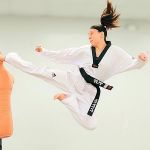 How to Increase Your Vertical Jump for Tae Kwon Do Flying Kicks
 The History of the Tae Kwon Do Peace Corps