
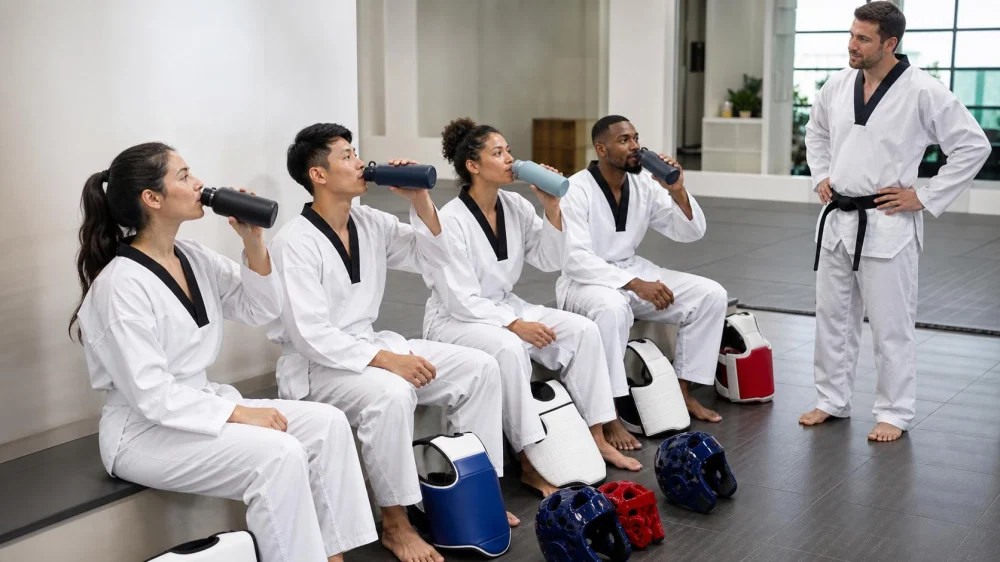
Tae Kwon Do Class Hydration: Plan Fluids and Breaks
Hydration for Tae Kwon Do is more than taking one large drink after class. Room temperature, dobok and protective gear, class intensity, individual sweat rate, health conditions, and time between sessions all matter. A practical plan starts before warm-up, keeps a personal bottle accessible, uses scheduled opportunities to drink, and treats heat-illness symptoms as a reason to stop.
Quick answer
Arrive normally hydrated, bring a clean labeled bottle, and learn the dojang’s break and bottle-location rules. Drink during available breaks instead of intentionally avoiding fluids, and pace the session to the heat, humidity, equipment, and your condition. Do not force excessive water. Stop activity and move to a cool place if you feel faint or weak; confusion, collapse, seizures, or loss of consciousness can signal a medical emergency requiring immediate emergency help.
Budo Martial Arts Studio / budo martial arts studio
Ewing TownshipMercer CountyNew Jersey
9 Scotch Rd, Ewing Township, NJ 08628, USA
Prepare before class
Check the schedule, expected class content, room conditions, and whether sparring gear will be used. A technical forms session, repeated kicking drills, and full protective-gear rounds impose different demands. Hot or humid weather can matter even indoors if ventilation or cooling is limited.
Drink regularly through the day according to your needs rather than trying to make up a deficit immediately before class. Eat normal meals unless a healthcare professional has given different advice. Very large drinks immediately before jumping or kicking may feel uncomfortable.
Tell the instructor privately about relevant medical restrictions, recent illness, heat sensitivity, or a prescribed action plan. Confirm where students can take breaks and whom to notify when symptoms begin.
Champions Martial Arts Plainview / champions martial arts plainview
PlainviewNassau CountyNew York
10 Washington Ave, Plainview, NY 11803, USA
Pack and manage a bottle
Use a bottle that closes securely, is easy to identify, and holds enough for the planned session. Place it in the designated area away from the mat edge, exits, and kicking lanes. Do not bring glass onto the training floor.
Wash the bottle after use and let it dry. Do not share bottles, mouthpieces, towels, or used cups. If a bottle spills, notify the instructor and keep people away until the floor is cleaned and dry.
Plain water is often appropriate for ordinary classes. Sports drinks add carbohydrate, flavor, and electrolytes but can also add sugar and are not automatically necessary. Individual needs during prolonged, intense, or repeated activity vary; athletes with medical or nutrition questions should consult qualified professionals.
Drink and pace during training
Use the instructor’s scheduled breaks and ask for a break if symptoms or unusual thirst develop. Sip at a comfortable rate. A training culture that treats water avoidance as toughness can obscure early problems.
Match intensity to present conditions. Start a hot session gradually, especially after time away or when moving from a cooler environment. Reduce kick volume, shorten rounds, remove optional outer layers during breaks if rules permit, and allow more recovery when heat or humidity rises.
Partners should monitor one another. A change in coordination, unusual irritability, poor responses, or a sudden decline in performance deserves attention. Do not send a symptomatic student to wait alone.
Adjust for heat and protective gear
Chest protectors, headgear, forearm and shin guards, and other equipment can trap heat and reduce evaporation. Inspect and fit gear before the active round so adjustment time does not extend exposure. During approved breaks, move to a cooler area and remove equipment as the instructor directs.
The Centers for Disease Control and Prevention advises athletes in hot conditions to schedule activity for cooler times where possible, pace activity, start slowly, drink more water than usual, and not wait until thirst to drink. Indoor classes still need attention to heat, ventilation, and individual response.
Class organizers should have an emergency plan, a way to call emergency services, trained supervision, and access to suitable cooling and first-aid resources. Students should know the stop signal and exit route before hard rounds begin.
Recognize reasons to stop
Stop and tell the instructor for faintness, weakness, dizziness, headache, nausea, unusual cramps, confusion, chills in the heat, loss of coordination, or a rapid decline in ability. Move out of activity to a cooler place and follow the emergency plan.
Heat stroke is an emergency. Confusion, altered mental status, slurred speech, seizures, collapse, or loss of consciousness require immediate emergency action and rapid cooling according to trained local protocols. Do not give fluid to someone who is confused, unconscious, vomiting repeatedly, or unable to swallow safely.
Chest pain, severe breathing difficulty, a severe allergic reaction, or another life-threatening symptom also requires emergency care. When uncertain, prioritize the person over finishing class.
Recover after class
Cool down as directed, move to a comfortable environment, and continue drinking according to thirst and individual guidance. Eat a normal meal or planned recovery snack when appropriate. Avoid using alcohol as a recovery drink.
Change out of damp clothing, dry protective gear, and clean shared surfaces according to school rules. Record unusual symptoms, room conditions, class type, and what you drank if the experience may help future planning.
Do not return immediately to hard training after significant heat illness. Medical evaluation and an individualized return plan may be necessary, especially after confusion, collapse, emergency cooling, or transport.
Account for individual needs
Children need active supervision and reliable access to breaks. Older students, pregnant athletes, and people with heart, kidney, endocrine, neurological, or other health conditions may need adjustments. Some prescription and over-the-counter medicines can affect heat tolerance or fluid balance.
Do not change medication, salt intake, or fluid limits based on a general article. People with clinician-prescribed fluid or electrolyte restrictions should follow that plan and discuss training conditions with the clinician.
Body weight changes can sometimes help trained professionals estimate sweat loss, but self-directed weighing can be misleading and inappropriate for some athletes. Do not turn hydration monitoring into rapid weight cutting. Weight cutting and deliberate dehydration can be dangerous.
Frequently asked questions
Should I wait until I feel thirsty?
Thirst is useful but may lag during heat and hard exercise. Use planned opportunities and individual guidance without forcing excessive fluid.
Do I always need an electrolyte drink?
No. Water is often suitable for ordinary classes. Duration, intensity, sweat loss, meals, climate, and medical needs affect the choice.
Can protective gear make overheating more likely?
It can trap heat and limit evaporation. Use appropriate breaks, pacing, room controls, and instructor supervision.
What if I missed a drink break?
Tell the instructor and use the next safe opportunity. Do not gulp an extreme amount or continue through symptoms.
Next steps
Before the next class, clean and fill a personal bottle, check expected room and gear conditions, and review break and emergency procedures. During class, pace the warm-up, use drinking opportunities, watch your partner, and stop promptly for heat-illness symptoms.
For current public-health guidance, review the CDC’s Heat and Athletes page.
 Aikido of San Jose4.0 (7 reviews)
 Nikko Jujitsu School4.0 (9 reviews)
 Gracie Barra San Clemente Martial Arts4.0 (47 reviews)
 Karate Institute of America4.0 (4 reviews)
 Keweenaw Korean Martial Arts0.0 (0 reviews)
 Wing Chun School of Internal Arts5.0 (6 reviews)
 How to Execute a Jumping Roundhouse Kick to the Head
 How to Execute a Double Kick Combination in Sparring
 How to Perform a Flawless Axe Kick: A Step-by-Step Guide
 DIY Tae Kwon Do Training Equipment for Home Practice
 How to Increase Your Vertical Jump for Tae Kwon Do Flying Kicks
 The History of the Tae Kwon Do Peace Corps