Tae Kwon Do Bowing Etiquette: Follow the School's Cues
On this page
Quick answer
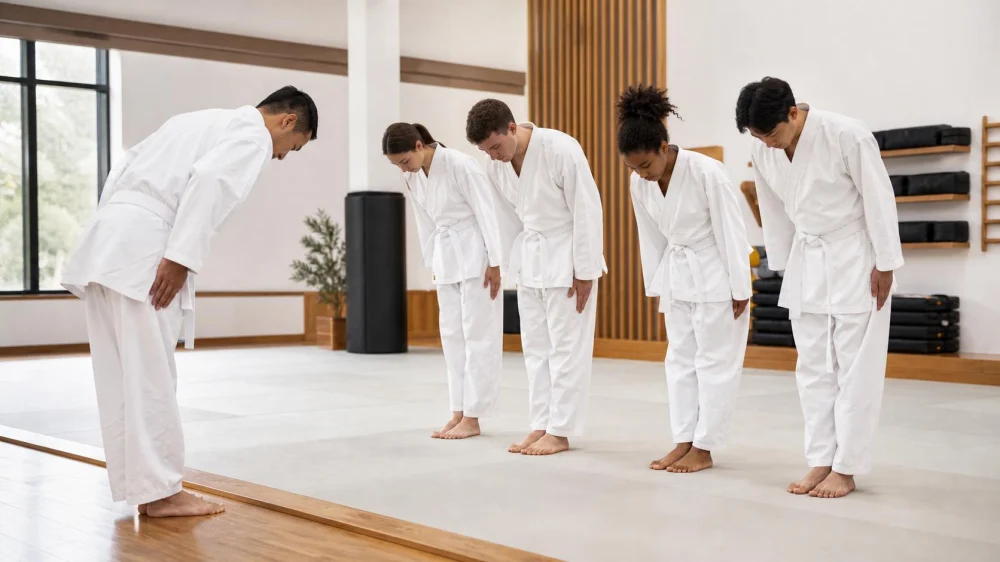
In Tae Kwon Do, bow when the instructor or school routine calls for it, often at the training-area boundary, during lineup, and before or after partner work. Stand with control, follow the senior student's timing, incline briefly, and return attention to the other person. Customs vary, so observe first and ask politely instead of assuming one universal sequence.
Budo Martial Arts Studio / budo martial arts studio
Ewing TownshipMercer CountyNew Jersey
9 Scotch Rd, Ewing Township, NJ 08628, USA
Understand what the bow communicates
Tae Kwon Do bowing etiquette is a structured way to show attention, respect, readiness, thanks, or closure within training. It is not a claim that every practitioner has the same beliefs, and it does not replace safe conduct or clear communication.
The practical meaning comes from context. A bow at the edge of the training floor can mark entry into practice. A partner bow can confirm that both people are ready to begin or have finished. A lineup bow can acknowledge the instructor, class, school tradition, or displayed symbols according to that school's practice.
Champions Martial Arts Plainview / champions martial arts plainview
PlainviewNassau CountyNew York
10 Washington Ave, Plainview, NY 11803, USA
Recognize common bowing moments
Many United States schools use bows at some of these moments:
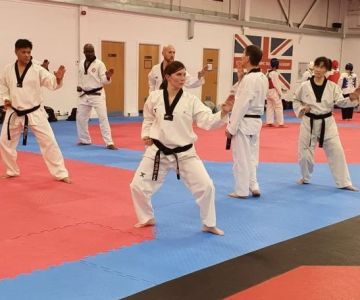
- entering or leaving the dojang or marked training floor;
- opening and closing class during formal lineup;
- greeting an instructor or senior student in a training context;
- before and after partner drills, sparring, or holding a target;
- before beginning and after completing a poomsae;
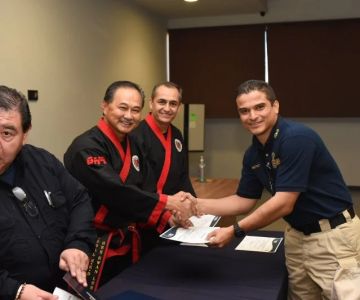
- when receiving a belt, certificate, equipment, or direct instruction; and
- at ceremonies, tests, or competitions when an official gives the cue.
Not every school bows at every moment. Excessive unsignaled bowing can interrupt a drill just as missing a formal cue can disrupt the group. Match the local routine.
Use a simple respectful bow
- Stop safely. Set down equipment if required and make sure you are not stepping into another person's movement path.
- Stand with control. Use the school's attention stance and keep hands where the instructor teaches.
- Keep awareness. Face the intended person or direction. In partner practice, do not drop awareness completely.
- Incline briefly. Bend from the upper body only as far as the school demonstrates, without a theatrical or rushed movement.
- Return to posture. Reestablish eye line and wait for the next cue.
Timing and sincerity matter more than performing a deep bow. During sparring or moving drills, follow the referee or instructor's commands so both participants begin together.
Adapt to the school
Terminology, hand position, depth, eye contact, flags or portraits, rank order, and command language can differ among Tae Kwon Do organizations and independent schools. When visiting, arrive early and ask: “When does this class bow, and where should a guest stand?”
Watch the designated class leader rather than copying several students at once. If you miss a cue, pause, follow the next clear instruction, and ask after the drill. A small mistake by a respectful beginner normally needs a simple correction, not a long apology that delays class.
If a religious, cultural, disability, balance, pain, or trauma-related concern affects bowing, speak privately with the instructor about a respectful alternative such as a smaller inclination, head nod, verbal acknowledgment, or stable supported posture.
Practice without overthinking
- Learn the attention stance used by the school.
- Identify the training-floor boundary and lineup positions.
- Listen for the opening, partner, and closing cues.
- Keep the movement brief, controlled, and free of extra gestures.
- Do not bow while holding equipment in an unsafe way.
- Ask one clear question when the routine is uncertain.
- Show respect afterward through safe contact, honest effort, and care for the shared space.
Limitations and important notes
- This is general etiquette guidance; the instructor and event officials define the applicable routine.
- Do not force a painful range of motion or sacrifice balance for formality.
- During sparring, maintain protective awareness and obey the referee's start and stop commands.
- A bow does not excuse unsafe contact, bullying, unwanted touch, or ignoring a stated boundary.
- Visitors should ask before photographing ceremonies or students, particularly children.
Frequently asked questions
Do I bow every time I see the instructor?
Not necessarily. Some schools use a bow for formal greetings; others reserve it for lineup and training transitions. Follow the instructor's explanation and the established class pattern.
Should I keep eye contact while bowing?
Practice differs. Partner and sparring contexts may emphasize awareness, while formal customs may use a different gaze. Ask the school rather than treating either method as universal.
What if I forget to bow?
Follow the next cue and continue safely. If needed, acknowledge the correction briefly after the activity. Do not make a sudden movement that confuses a partner.
Can a person bow from a seated position?
Yes, a school can adapt the acknowledgment to a stable seated posture or another agreed gesture. Discuss the method before class so the cue remains clear.
Is bowing the same at every Tae Kwon Do tournament?
No. Competition organizations publish their own procedures and officials give commands. Attend the briefing and follow the event's current rules.
Conclusion and next steps
At your next class, identify three cues: entry, partner work, and closing lineup. Use a simple controlled bow and let the school's leader set the timing. When a custom or physical need is unclear, ask before practice; respectful clarity is better than guessing.
Evidence note: This guidance reflects common martial-arts class etiquette and safety practice. Exact customs come from the school, instructor, organization, event rules, and the needs of the participants.

 Aikido of San Jose4.0 (7 reviews)
 Nikko Jujitsu School4.0 (9 reviews)
 Gracie Barra San Clemente Martial Arts4.0 (47 reviews)
 Karate Institute of America4.0 (4 reviews)
 Keweenaw Korean Martial Arts0.0 (0 reviews)
 Wing Chun School of Internal Arts5.0 (6 reviews)
 How to Execute a Jumping Roundhouse Kick to the Head
 How to Execute a Double Kick Combination in Sparring
 How to Perform a Flawless Axe Kick: A Step-by-Step Guide
 DIY Tae Kwon Do Training Equipment for Home Practice
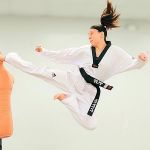 How to Increase Your Vertical Jump for Tae Kwon Do Flying Kicks
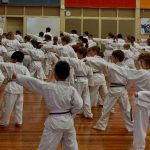 The History of the Tae Kwon Do Peace Corps