
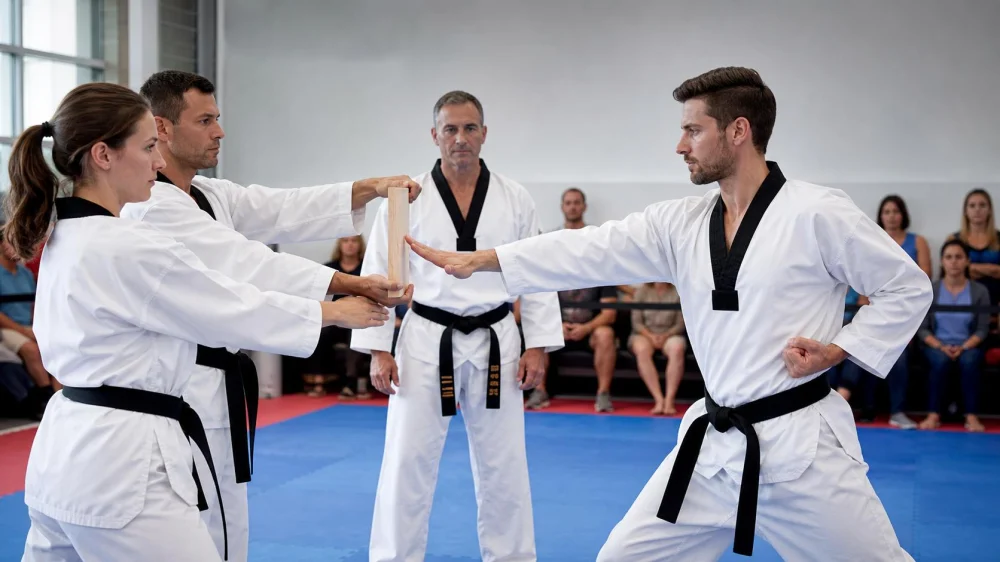
Tae Kwon Do Board Breaking: Confirm Setup and Safety
On this page
Quick answer
Board breaking should occur only under qualified instructor supervision with an approved board, stable holders or stand, clear space, rehearsed technique, and a stop plan. Match material and difficulty to the student rather than rank pressure. Never hold a board with fingers in the strike path, improvise hard materials, or repeat impacts through pain or poor control.
Budo Martial Arts Studio / budo martial arts studio
Ewing TownshipMercer CountyNew Jersey
9 Scotch Rd, Ewing Township, NJ 08628, USA
Why schools use breaking
Breaking can demonstrate focus, alignment, speed, accuracy, and commitment through a target. It may appear in class, rank testing, demonstrations, or competition. It is not proof of fighting ability or personal worth.
Schools use different boards, techniques, and standards. A student should follow the instructor and event rules rather than copying online videos.
Champions Martial Arts Plainview / champions martial arts plainview
PlainviewNassau CountyNew York
10 Washington Ave, Plainview, NY 11803, USA
Train only with instructor approval
Ask the instructor whether you are ready for the specific hand or foot technique. Previous hand, wrist, foot, ankle, bone, joint, skin, or neurological injury may require medical advice and modification.
You may decline or stop an attempt. Youth training should use age-appropriate material, supervision, consent, and safeguarding policies. No instructor should use embarrassment or threats to force a break.
Confirm board material
Breaking materials vary in thickness, grain, moisture, species, scoring, and reusable design. These factors change difficulty. Use boards or rebreakable targets selected and inspected by the instructor.
- Reject cracked, splintered, warped, or contaminated material.
- Confirm grain direction and intended breaking orientation.
- Keep board size and rating matched to the student.
- Do not substitute tile, concrete, ice, stacked objects, or construction scrap.
- Wear eye protection when the school or material requires it.
Set holders and space
Holders need a stable stance, clear communication, and hands outside the strike path. The instructor should show exact grip, board height, angle, and release. A purpose-built stand must sit securely on the correct surface.
- Clear spectators, bags, water bottles, and loose boards.
- Check mat traction and overhead clearance.
- Agree on target, technique, command, and stop cue.
- Position holders and fingers as instructed.
- Plan where broken pieces will travel.
- Assign one instructor to control the attempt.
Rehearse before impact
Practice the movement against air or a pad. Confirm stance, distance, chamber, striking surface, alignment, follow-through, and recovery. Begin below full speed and make corrections before approaching the board.
Fatigue, fear, distraction, or an unstable target changes risk. Reset instead of forcing an attempt. More boards should never replace sound technique.
Manage the attempt
Approach only on the instructor's signal. Focus through the target while maintaining the taught alignment. Holders stay still unless the stop cue is called. Spectators remain behind the boundary.
If the board does not break, stop and assess. Check pain, skin, target movement, holder position, distance, and technique. The instructor should decide whether to modify, replace the board, return to pad work, or end the session.
Check after the break
- Account for splinters and pieces before anyone walks through.
- Inspect hands, feet, and holders for cuts or impact pain.
- Clean minor wounds according to first-aid guidance.
- Stop for swelling, deformity, numbness, weakness, or reduced movement.
- Dispose of or store boards according to school rules.
- Clear the mat before the next student.
Seek urgent medical care for severe pain, deformity, uncontrolled bleeding, loss of sensation, a suspected fracture, head injury, or serious eye injury.
Unsafe practices to avoid
- Breaking alone without supervision.
- Surprise or moving targets.
- Fingers, faces, or bodies behind the strike path.
- Stacking beyond the student's demonstrated level.
- Trying again while injured or emotionally pressured.
- Using public challenges or social media as the safety standard.
Important limitations
This article is general martial-arts safety information, not a breaking technique lesson or medical clearance. Materials, school standards, age rules, event rules, and instructor qualifications differ. Students should train only within a supervised, safeguarded program.
Sources and evidence notes
- USA Taekwondo: athlete safety, sanctioned training, and safeguarding resources.
- U.S. Center for SafeSport: respectful coaching, athlete boundaries, and reporting education.
- American Red Cross: first-aid guidance for cuts, bleeding, and suspected musculoskeletal injury.
- The school and event rules: controlling instructions for approved materials, holders, divisions, and attempts.
Frequently asked questions
Does a thicker board always mean better technique?
No. Material varies, and safe progression, alignment, accuracy, and control matter more than spectacle.
Can parents hold boards for children?
Only when the instructor permits it and has trained the holder. Finger position and stability are safety-critical.
Should I continue after a failed attempt?
Pause for instructor assessment. Pain, poor control, target movement, or fatigue is a reason to stop or regress.
Are reusable boards safer?
They reduce splinters but still require rating, alignment, holders, space, and supervision. Follow the manufacturer's instructions.
Conclusion
Safe Tae Kwon Do breaking is a controlled lesson, not an improvised stunt. Use approved materials, qualified supervision, stable holders, rehearsed technique, and clear boundaries. Stop when pain, fear, fatigue, or setup problems appear, and treat the student's judgment and well-being as more important than whether a board breaks.


 Aikido of San Jose4.0 (7 reviews)
 Nikko Jujitsu School4.0 (9 reviews)
 Gracie Barra San Clemente Martial Arts4.0 (47 reviews)
 Karate Institute of America4.0 (4 reviews)
 Keweenaw Korean Martial Arts0.0 (0 reviews)
 Wing Chun School of Internal Arts5.0 (6 reviews)
 How to Execute a Jumping Roundhouse Kick to the Head
 How to Execute a Double Kick Combination in Sparring
 How to Perform a Flawless Axe Kick: A Step-by-Step Guide
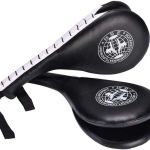 DIY Tae Kwon Do Training Equipment for Home Practice
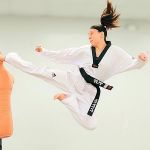 How to Increase Your Vertical Jump for Tae Kwon Do Flying Kicks
 The History of the Tae Kwon Do Peace Corps