
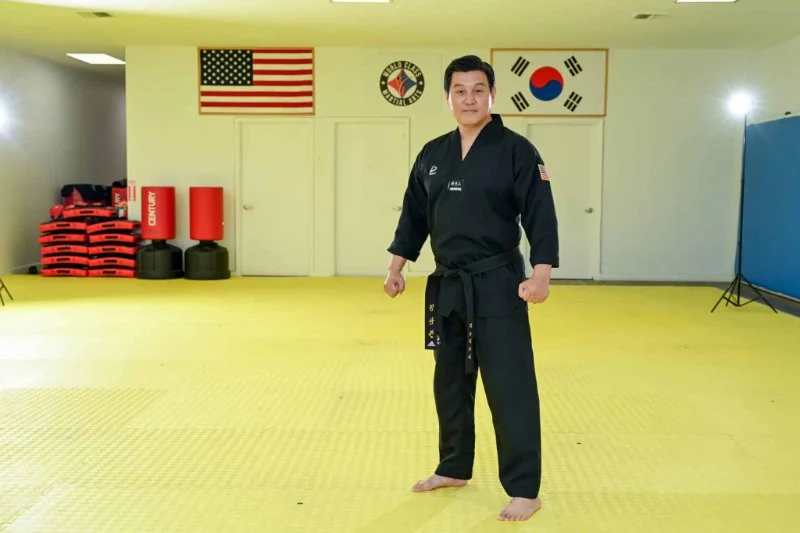
How to Develop Precision and Control in Tae Kwon Do Kicks
Precision and control are essential components of effective Tae Kwon Do kicks. Whether you’re aiming to land a perfectly timed roundhouse kick or a powerful side kick, developing these qualities can significantly improve your martial arts performance. In this article, we will dive into practical techniques and tips to help you develop precision and control in your Tae Kwon Do kicks, ensuring your movements are both effective and safe.
- Focus on Foundational Technique
- Strengthen Your Core and Legs
- Visualize Your Targets
- Consistent Practice and Feedback
- Real-Life Examples: Improving Kick Precision
1. Focus on Foundational Technique
The foundation of every Tae Kwon Do kick lies in mastering the basic technique. Without a solid foundation, achieving precision and control will be difficult. The first step is to ensure that your stances, foot positioning, and body alignment are correct.
Budo Martial Arts Studio / budo martial arts studio
Ewing TownshipMercer CountyNew Jersey
9 Scotch Rd, Ewing Township, NJ 08628, USA
1.1 Proper Foot Positioning
Your foot positioning during a kick plays a major role in its control. For example, during a roundhouse kick, the pivot foot must rotate properly to allow your leg to travel through its range of motion. Practice this motion slowly at first to ensure you are building good habits.
Champions Martial Arts Plainview / champions martial arts plainview
PlainviewNassau CountyNew York
10 Washington Ave, Plainview, NY 11803, USA
1.2 Posture and Balance
Your posture and balance are critical for both power and precision. Make sure that your standing leg is firmly rooted to the ground, and your core is engaged to maintain stability throughout the kick. Without balance, your kicks will lack control and accuracy.
2. Strengthen Your Core and Legs
Precision and control come from strength. To improve the power and accuracy of your kicks, it's important to focus on strengthening your legs and core muscles. These muscles allow you to stabilize your kicks and execute them with greater finesse.
2.1 Core Strengthening
Your core plays a vital role in controlling the direction and power of your kicks. Incorporate exercises like planks, Russian twists, and leg raises to enhance your core stability. A strong core ensures that your kicks are precise and that you can quickly adjust your movements as needed.
2.2 Leg Conditioning
Leg strength is equally crucial. Incorporate squats, lunges, and calf raises into your training routine to increase your leg power. Additionally, regular stretching will help you improve your flexibility, which is key for executing high, controlled kicks.
3. Visualize Your Targets
Visualization is an incredibly powerful technique that athletes across all sports use to improve performance. In Tae Kwon Do, visualization allows you to mentally rehearse the exact mechanics of your kicks before performing them. By visualizing your targets and the precise movement needed to strike them, you enhance your focus and control.
3.1 Mental Rehearsal
Before executing a kick, mentally rehearse the technique in your mind. Visualize the trajectory, impact, and recovery of the kick. This mental preparation helps you adjust your movements in real-time, making your actions more precise and controlled.
3.2 Focus on Small Details
When visualizing, focus on the small details such as the angle of your foot, the alignment of your hip, and the tension in your leg. These fine adjustments will help you develop muscle memory, which will naturally transfer to your physical performance.
4. Consistent Practice and Feedback
Consistency is the key to developing control and precision in Tae Kwon Do kicks. Regular practice allows you to build muscle memory and refine your technique. However, practice alone is not enough—you also need feedback to continue improving.
4.1 Slow and Controlled Practice
Start by practicing kicks slowly, focusing on technique and control rather than speed or power. This will allow you to perfect the movement before increasing intensity. Gradually add speed while maintaining form.
4.2 Seek Feedback from Instructors
Getting feedback from a qualified instructor is essential. They can pinpoint areas of improvement and help you refine your kicks. Make sure to ask for specific feedback on your precision and control, as this will provide you with valuable insights for your training.
5. Real-Life Examples: Improving Kick Precision
Let's take a look at a few real-life examples of Tae Kwon Do practitioners who worked to improve the precision and control of their kicks.
5.1 Sarah’s Story: Mastering the Roundhouse Kick
Sarah, a black belt in Tae Kwon Do, struggled with precision in her roundhouse kicks. By focusing on her foot positioning and practicing slowly at first, she was able to develop better control over her kicks. With consistent practice and feedback from her instructor, Sarah's kicks became sharper and more controlled, improving her sparring performance.
5.2 John’s Experience: Strengthening His Kicks Through Core Training
John, a brown belt, found that his kicks lacked power and control. He started incorporating core-strengthening exercises into his training routine, such as planks and leg raises. As his core strength improved, he noticed greater precision and stability in his kicks, leading to better execution during his sparring sessions.
By following these strategies—focusing on technique, strengthening key muscles, visualizing your kicks, and practicing consistently—you can develop the precision and control necessary to master Tae Kwon Do kicks. Stay patient, stay committed, and enjoy the journey to becoming a more skilled martial artist.

 Aikido of San Jose4.0 (7 reviews)
 Nikko Jujitsu School4.0 (9 reviews)
 Gracie Barra San Clemente Martial Arts4.0 (47 reviews)
 Karate Institute of America4.0 (4 reviews)
 Keweenaw Korean Martial Arts0.0 (0 reviews)
 Wing Chun School of Internal Arts5.0 (6 reviews)
 How to Execute a Jumping Roundhouse Kick to the Head
 How to Execute a Double Kick Combination in Sparring
 How to Perform a Flawless Axe Kick: A Step-by-Step Guide
 DIY Tae Kwon Do Training Equipment for Home Practice
 How to Increase Your Vertical Jump for Tae Kwon Do Flying Kicks
 The History of the Tae Kwon Do Peace Corps