
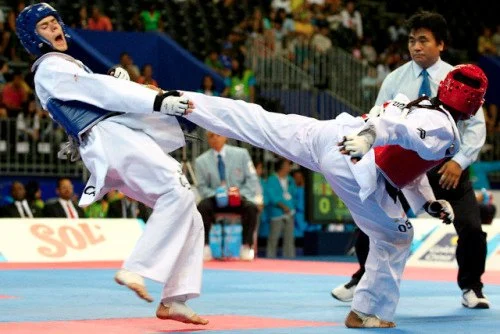
How to Build Better Tae Kwon Do Kicks for Self-Defense
- The Importance of Effective Kicks in Self-Defense
- Types of Tae Kwon Do Kicks for Self-Defense
- Technique Improvement Tips for Better Kicks
- Common Mistakes to Avoid When Kicking
- Incorporating Self-Defense into Your Tae Kwon Do Training
The Importance of Effective Kicks in Self-Defense
In self-defense situations, having powerful and effective kicks can make all the difference. Tae Kwon Do, known for its fast and dynamic kicks, offers practical tools for defending yourself in real-world scenarios. A well-executed kick can help you create space, disable an attacker, or escape from a dangerous situation. Learning to improve your kicks is not only about power but also about accuracy, speed, and timing.
For anyone looking to enhance their self-defense skills, focusing on mastering the different types of kicks in Tae Kwon Do can provide a huge advantage. The proper kick can allow you to strike an opponent’s vulnerable areas, giving you a better chance of defending yourself effectively.

Budo Martial Arts Studio / budo martial arts studio
Ewing TownshipMercer CountyNew Jersey
9 Scotch Rd, Ewing Township, NJ 08628, USA
Types of Tae Kwon Do Kicks for Self-Defense
Tae Kwon Do includes a variety of kicks that can be used in different self-defense scenarios. Here are some of the most effective ones:

Champions Martial Arts Plainview / champions martial arts plainview
PlainviewNassau CountyNew York
10 Washington Ave, Plainview, NY 11803, USA
1. Front Kick
The front kick is one of the most basic and useful kicks for self-defense. It’s fast, powerful, and can help you push away or stop an attacker in their tracks. The front kick targets the opponent’s midsection or face, creating distance and giving you time to escape or prepare for another move.
2. Roundhouse Kick
The roundhouse kick is one of the most versatile kicks in Tae Kwon Do. It’s ideal for striking an opponent’s head or torso and can be delivered with great force when executed correctly. The roundhouse kick is powerful, and its sweeping motion makes it difficult for an attacker to block effectively.
3. Side Kick
The side kick is perfect for self-defense because of its ability to generate a lot of power while keeping you at a safe distance from your opponent. A well-placed side kick can hit the attacker’s knee, hip, or torso, making it an effective tool for both defense and offense.
4. Back Kick
The back kick is another highly effective self-defense tool. It’s designed to strike behind you, typically aiming for an opponent’s midsection or head. This kick can be used when someone is coming from behind, and it has a strong impact, making it an excellent option for self-defense in a surprise attack scenario.
Technique Improvement Tips for Better Kicks
To improve your Tae Kwon Do kicks for self-defense, you need to focus on perfecting your technique. Here are some expert tips to help you enhance your kicking abilities:
1. Focus on Flexibility
Flexibility is a key component in delivering powerful kicks. Incorporate stretching exercises into your training to improve your range of motion. The more flexible your legs and hips, the higher and faster your kicks can be, giving you a distinct advantage in a self-defense situation.
2. Strengthen Your Core
A strong core is crucial for maintaining balance and generating power during your kicks. Exercises like planks, leg raises, and crunches can help strengthen the muscles in your abdomen and lower back, providing the support needed for more powerful and controlled kicks.
3. Work on Speed
Speed is just as important as power when it comes to self-defense. The faster your kick, the less time your opponent has to react. Speed drills and repetition will help you develop the quick reflexes needed to deliver a kick before your opponent can block or counterattack.
4. Perfect Your Aim
In self-defense, accuracy matters just as much as power. Focus on improving your aim and hitting vital areas of the body, such as the stomach, chest, head, or knees. Target practice with pads or bags will help improve your precision and consistency.
Common Mistakes to Avoid When Kicking
To make sure you’re training effectively, avoid these common mistakes when performing Tae Kwon Do kicks:
1. Overextending
Overextending your kick can leave you off-balance and vulnerable. It’s important to strike with precision, ensuring you don’t extend your leg too far beyond what’s necessary. Practice controlled kicks that hit your target without leaving you open to a counterattack.
2. Not Protecting Your Center
When kicking, make sure to keep your hands up to protect your face and body. Many beginners focus so much on the kick that they neglect their defensive posture. A good self-defense strategy requires awareness of your body position at all times.
3. Lack of Follow-Through
Failing to follow through with your kick can reduce its effectiveness. A good kick should have strong momentum, and you should be able to deliver a secondary strike or prepare to move quickly after making contact. Ensure that your kick flows naturally into your next movement.
Incorporating Self-Defense into Your Tae Kwon Do Training
To build better Tae Kwon Do kicks for self-defense, it’s important to incorporate practical self-defense techniques into your training routine. While traditional forms and sparring are essential, real-world scenarios require different strategies. Work with your instructor to practice kicking combinations, defense maneuvers, and situational drills that mimic actual self-defense situations.
If you’re looking to enhance your Tae Kwon Do practice, visit Jeuns TKD Hub for the best training resources, equipment, and expert advice on improving your kicking power and self-defense skills.




 Aikido of San Jose4.0 (7 reviews)
 Nikko Jujitsu School4.0 (9 reviews)
 Gracie Barra San Clemente Martial Arts4.0 (47 reviews)
 Karate Institute of America4.0 (4 reviews)
 Keweenaw Korean Martial Arts0.0 (0 reviews)
 Wing Chun School of Internal Arts5.0 (6 reviews)
 How to Execute a Jumping Roundhouse Kick to the Head
 How to Execute a Double Kick Combination in Sparring
 How to Perform a Flawless Axe Kick: A Step-by-Step Guide
 DIY Tae Kwon Do Training Equipment for Home Practice
 How to Increase Your Vertical Jump for Tae Kwon Do Flying Kicks
 The History of the Tae Kwon Do Peace Corps