
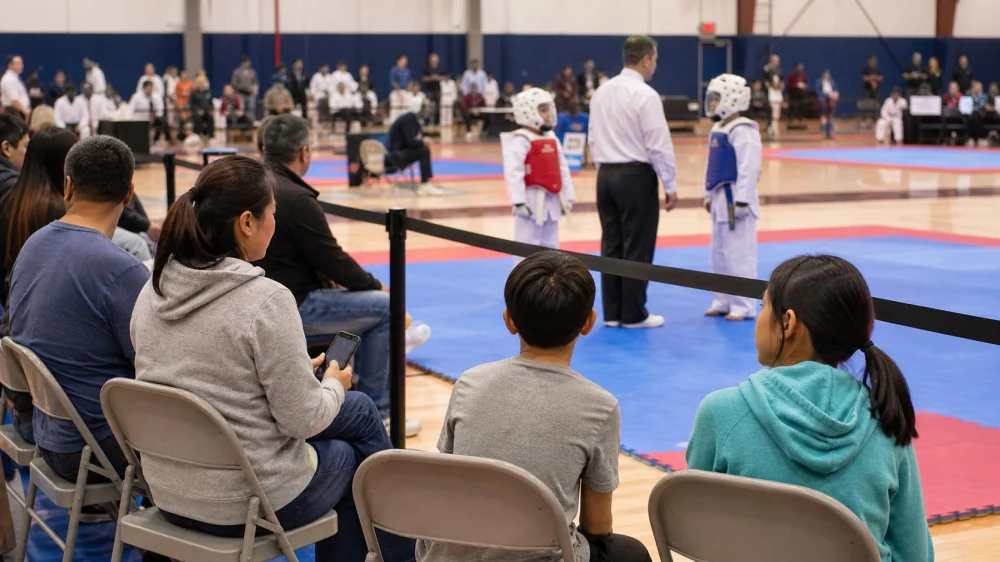
First Tae Kwon Do Tournament: A Spectator Etiquette Guide
On this page
Quick answer
At a Tae Kwon Do tournament, arrive early, follow check-in and seating instructions, stay outside competition and warm-up areas, silence your phone, and support athletes without shouting technical commands over their coach. Ask before recording, especially when children are present. Expect schedule changes, keep walkways clear, and let officials, coaches, and medical staff handle disputes or injuries.
This guide is for first-time spectators at Tae Kwon Do events in the United States. Tournament rules vary by organizer, governing body, venue, age group, and competition format. The published event packet, announcements, staff instructions, and the athlete’s school should be treated as the current source.
Budo Martial Arts Studio / budo martial arts studio
Ewing TownshipMercer CountyNew Jersey
9 Scotch Rd, Ewing Township, NJ 08628, USA
What to confirm before you go
Ask the athlete, coach, or event organizer for the spectator information rather than relying on a prior tournament. Confirm:
- venue address, correct entrance, parking, public transit, and accessibility;
- doors-open time, athlete check-in, spectator admission, and payment method;
- whether tickets, wristbands, or identification are required;
- bag, food, drink, chair, and outside-equipment policies;
- photography, video, livestream, and social-media rules;
- the approximate division schedule and how updates are announced;
- where spectators may sit and whether seating is assigned;
- accessibility accommodations and who to contact at the venue; and
- weather, cancellation, and emergency communication channels.
Do not promise a child or first-time competitor that the event will start at an exact minute. Brackets, equipment checks, officiating, medical pauses, and earlier divisions can move the schedule. Use a time window and explain that waiting is part of tournament day.
Wear comfortable shoes and layers suitable for a gym that may feel cold when sitting and warm when crowded. Avoid clothing or signs that block another spectator’s view. Bring hearing protection for anyone sensitive to whistles, announcements, and cheering if the venue permits it.
Champions Martial Arts Plainview / champions martial arts plainview
PlainviewNassau CountyNew York
10 Washington Ave, Plainview, NY 11803, USA
Arrival, check-in, and seating
- Use the spectator entrance. Competitors may have a separate line for weigh-in, credentials, uniforms, or equipment checks. Do not follow them into restricted areas.
- Read posted rules. Venue instructions can change from the event packet. Note exits, restrooms, first aid, concessions, and accessibility routes.
- Choose an allowed seat. Stay behind barriers and out of officials’ tables, staging areas, ring approaches, and warm-up space.
- Keep aisles clear. Store bags and strollers where permitted. Do not sit on floors in evacuation routes or around the edge of a competition mat.
- Limit seat saving. Follow venue policy and release unused chairs when crowds grow. Large blankets or equipment should not claim multiple spectator spaces.
- Move between matches. If you must enter or leave a row, wait for a natural pause so you do not block a poomsae performance or critical sparring exchange.
- Follow staff directions promptly. A volunteer may need to clear an area, change a boundary, or redirect traffic even if that spot was previously open.
Children should remain with a responsible adult. Competition equipment, scoring tables, barriers, warm-up targets, and open floor are not play areas. A spectator should never step onto a mat to retrieve an item or approach an athlete unless an official invites it.
Support without sideline coaching
Cheer in a way that helps the athlete hear the official and designated coach. Positive support can be simple: applause, the athlete’s name, or a brief encouragement that fits the school’s culture.
Avoid shouting technical commands, scoring claims, or contradictory instructions. Even correct-sounding advice can distract an athlete, conflict with the coach’s plan, or cause them to miss the referee’s command. Spectators should not attempt to coach from another side of the ring.
Show respect to both competitors. Do not boo, mock a mistake, celebrate an injury, question a child directly, or make comments about body size, rank, nationality, or ability. Applaud effort and composure rather than only the result.
If you disagree with a call, stay in the spectator area. The event rules determine whether and how a coach can submit a protest or request review. A parent or friend confronting a referee, scorekeeper, or opposing athlete can disrupt the process and may affect the competitor’s standing.
After the event, let the athlete set the pace of the conversation. Ask what they want to talk about before analyzing performance. A calm meal, water, rest, and encouragement may be more useful than an immediate technical review.
Photos, video, and privacy
Permission to enter with a phone does not automatically mean every person may be recorded or posted. Events involving children, school groups, medical incidents, and changing areas need extra care.
- Check the organizer’s current photography and livestream policy.
- Ask the athlete and, for a minor, the responsible adult before posting identifiable media.
- Frame tightly enough to avoid capturing unrelated children and spectators.
- Do not photograph changing, weigh-in, treatment, credential, or private staging areas.
- Keep flash, bright lights, selfie sticks, tripods, and large lenses out unless specifically allowed.
- Do not block aisles, officials, coaches, or another spectator’s view for a recording.
- Never post an injury, emotional moment, score sheet, personal record, or medical response without appropriate permission.
If a staff member asks you to stop recording, comply and clarify later. A school or participant may have privacy needs that are not visible to you. When uncertain, keep the memory private or take a photo of your own group away from the competition area.
Plan for delays and a long day
Food and water: use venue-approved containers and designated eating areas. Do not bring food onto mats or warm-up floors. The athlete should follow the coach’s hydration and fueling plan rather than trying a new food moments before competing.
Schedule updates: listen for announcements and check only the official bracket or update channel. A crowd rumor that a division has moved can send people to the wrong ring.
Young siblings: bring quiet activities, headphones if allowed, and a second adult when possible. Do not let bored children run along ring barriers or climb bleachers.
Accessibility: request accommodations in advance and ask staff for the accessible route. Do not move reserved seating, ramps, or safety barriers without permission.
Cleanliness: use trash and recycling points, keep shoes and food off training mats, and leave enough room for venue staff. Stay home or follow public-health and event guidance when ill.
Departure: confirm whether the athlete must remain for awards, team photos, equipment return, or coach check-out. Leaving after one match may cause a missed next round or ceremony.
Event differences and safety limits
This guide reflects common indoor tournament practice: athletes, coaches, officials, volunteers, medical staff, and spectators have different roles, and clear boundaries support safety and fairness. It does not state the competition rules for any particular Tae Kwon Do organization.
Sparring contact levels, protective equipment, scoring, protests, coach access, division order, and photography policies differ. Use the event’s published rules and direct announcements. In an injury or emergency, remain clear so designated staff can reach the athlete; do not crowd the mat or provide treatment unless asked and qualified.
Frequently asked questions
Can spectators coach from the stands?
Usually the designated coach communicates technical instructions. Spectators should offer brief support without competing with the coach or referee. Follow the event’s exact rules.
When should I arrive?
Use the organizer’s doors-open and check-in information, then add time for parking, admission, seating, and schedule changes. The competitor may need to arrive earlier than spectators.
Can I sit near the competition mat?
Only in designated spectator seating. Keep behind barriers and out of coach, official, staging, and safety zones even if an area looks temporarily empty.
Is it okay to photograph my child’s match?
Check event policy and protect other participants’ privacy. Avoid flash, blocked views, private areas, injuries, and posting identifiable children without appropriate permission.
What should I do if the score looks wrong?
Do not confront officials. Tell the athlete’s coach discreetly if appropriate. The coach can decide whether event rules allow a question, correction, or protest.
Should I bring a chair?
Only if the venue permits personal chairs and identifies where they may be placed. Bleachers or folding chairs may already be provided, and outside chairs can block aisles.
Next steps
Read the event packet, confirm admission and photography rules, plan an early arrival, and bring only venue-approved items. Sit in the spectator area, keep walkways clear, support athletes without technical coaching, and respect privacy. Expect timing changes and use official updates. If a dispute, injury, or emergency occurs, stay calm and let the designated coach, officials, and medical staff respond.
 Aikido of San Jose4.0 (7 reviews)
 Nikko Jujitsu School4.0 (9 reviews)
 Gracie Barra San Clemente Martial Arts4.0 (47 reviews)
 Karate Institute of America4.0 (4 reviews)
 Keweenaw Korean Martial Arts0.0 (0 reviews)
 Wing Chun School of Internal Arts5.0 (6 reviews)
 How to Execute a Jumping Roundhouse Kick to the Head
 How to Execute a Double Kick Combination in Sparring
 How to Perform a Flawless Axe Kick: A Step-by-Step Guide
 DIY Tae Kwon Do Training Equipment for Home Practice
 How to Increase Your Vertical Jump for Tae Kwon Do Flying Kicks
 The History of the Tae Kwon Do Peace Corps