
- 1. The Importance of Speed and Agility in Tae Kwon Do
- 2. Key Drills to Improve Speed and Agility
- 3. Training Your Reflexes for Quick Movements
- 4. The Role of Strength and Conditioning
- 5. Common Mistakes to Avoid in Speed and Agility Training
1. The Importance of Speed and Agility in Tae Kwon Do
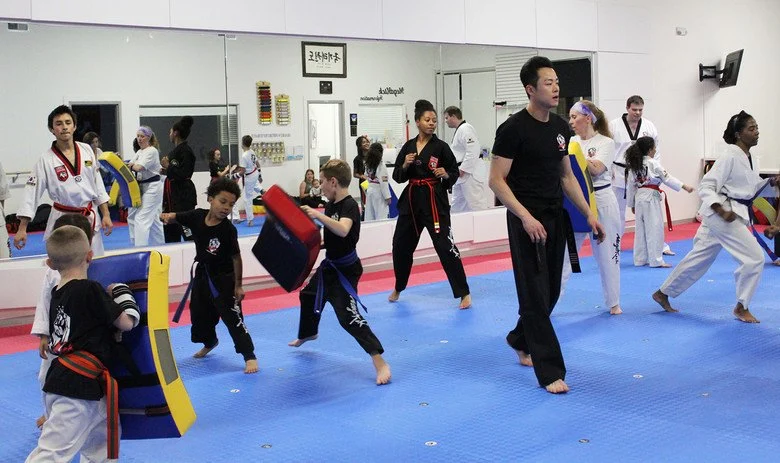
Speed and agility are essential attributes in Tae Kwon Do, as they directly impact your ability to perform effective attacks, defensive maneuvers, and quick counters. In a martial art that relies on high-impact kicks, fast footwork, and precise timing, enhancing your speed and agility will give you an edge over your opponent. These skills help you move quickly in and out of range, react faster, and execute techniques with power and precision.
Without the proper speed and agility, even the most accurate strikes and well-planned techniques can be ineffective. By improving your reflexes and movement speed, you can ensure that your kicks, blocks, and footwork are both fluid and effective in various combat scenarios.

Budo Martial Arts Studio / budo martial arts studio
Ewing TownshipMercer CountyNew Jersey
9 Scotch Rd, Ewing Township, NJ 08628, USA
2. Key Drills to Improve Speed and Agility
There are several Tae Kwon Do drills designed to boost both speed and agility. These exercises not only help develop your quickness but also improve your overall martial arts performance. Here are some key drills to incorporate into your training:

Champions Martial Arts Plainview / champions martial arts plainview
PlainviewNassau CountyNew York
10 Washington Ave, Plainview, NY 11803, USA
Footwork Drills
Footwork is fundamental to speed and agility in Tae Kwon Do. Practicing fast footwork allows you to close the distance quickly, maintain balance, and retreat smoothly when needed. One great drill is the "shuffling drill," where you practice quick lateral and diagonal movements, alternating your lead foot and back foot.
High-Knee Sprints
High-knee sprints are an excellent drill for improving both speed and agility. This exercise focuses on explosiveness, helping you move faster while improving your lower body strength. To perform this drill, sprint for 20-30 yards while driving your knees up towards your chest with each stride. This helps improve the quickness of your leg movements, essential for executing high kicks.
Agility Ladder Drills
Using an agility ladder is a great way to enhance your foot speed and coordination. Perform various ladder exercises, such as "in and out" or "zig-zag" movements, focusing on fast and controlled steps. These drills target your ability to move quickly while maintaining precise control of your foot placement, which is crucial for Tae Kwon Do techniques.
3. Training Your Reflexes for Quick Movements
Reflex training is essential for improving your reaction time in Tae Kwon Do. Developing quicker reflexes allows you to react faster to your opponent’s movements, making it easier to block, counter, or evade attacks. Here are some effective methods for training your reflexes:
Partner Drills
Partner drills are highly effective in improving reflexes, as they simulate real combat scenarios. In these drills, your partner will throw controlled attacks, and you’ll practice responding with quick blocks or counters. The unpredictability of these drills helps train your mind to react rapidly to different situations.
Reaction Ball Drills
A reaction ball is a small, bouncy ball with an unpredictable bounce. By practicing with a reaction ball, you can improve your hand-eye coordination and reaction time. Simply toss the ball against a wall and try to catch it as it bounces back, focusing on reacting as quickly as possible.
4. The Role of Strength and Conditioning
Strength and conditioning are key to building speed and agility in Tae Kwon Do. While speed and agility drills are essential, your muscles need to be strong enough to generate quick and powerful movements. By incorporating strength training and conditioning into your routine, you’ll be able to execute faster and more explosive kicks, punches, and movements.
Core Strength
A strong core is vital for speed and agility, as it helps stabilize your body during quick movements. Exercises like planks, Russian twists, and leg raises can help improve your core strength and contribute to better control and balance during your techniques.
Lower Body Strength
The lower body is where most of your speed and agility come from in Tae Kwon Do. Squats, lunges, and calf raises help build strength in the legs and hips, making it easier to execute fast kicks and explosive movements.
5. Common Mistakes to Avoid in Speed and Agility Training
While working on speed and agility, there are a few common mistakes that practitioners often make. Avoiding these pitfalls will help you train more effectively:
Overtraining
While it’s important to train consistently, overtraining can lead to fatigue, injury, and burnout. Ensure you give your body adequate rest to allow for recovery and muscle growth. Incorporating rest days into your training routine is essential for maintaining optimal performance.
Neglecting Flexibility
Flexibility is an important aspect of speed and agility, especially for high kicks and fluid movements. Incorporate regular stretching and flexibility exercises into your routine to avoid tight muscles and improve your range of motion.
Focusing Only on Speed
While speed is essential, it’s equally important to work on control, balance, and precision. Make sure your agility training emphasizes not just quickness but also the ability to execute techniques effectively and accurately.


 Aikido of San Jose4.0 (7 reviews)
 Nikko Jujitsu School4.0 (9 reviews)
 Gracie Barra San Clemente Martial Arts4.0 (47 reviews)
 Karate Institute of America4.0 (4 reviews)
 Keweenaw Korean Martial Arts0.0 (0 reviews)
 Wing Chun School of Internal Arts5.0 (6 reviews)
 How to Execute a Jumping Roundhouse Kick to the Head
 How to Execute a Double Kick Combination in Sparring
 How to Perform a Flawless Axe Kick: A Step-by-Step Guide
 DIY Tae Kwon Do Training Equipment for Home Practice
 How to Increase Your Vertical Jump for Tae Kwon Do Flying Kicks
 The History of the Tae Kwon Do Peace Corps