
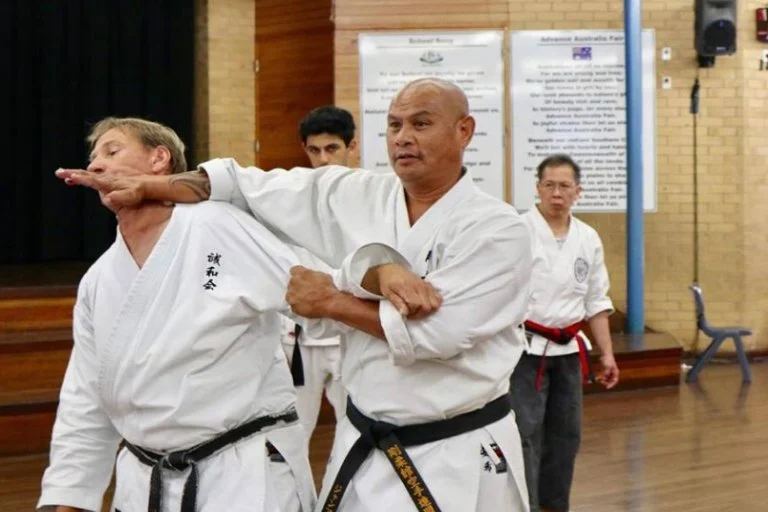
- Why the Knife Hand Block Matters in Martial Arts
- Understanding High Section Attacks
- What a Basic Knife Hand Block Actually Is
- Proper Body Positioning Before the Block
- Step-by-Step Guide to Performing the Technique
- Common Mistakes Beginners Make
- How Timing and Distance Change the Effectiveness
- Training Drills to Improve Knife Hand Blocks
- Real Training Experiences and Lessons From Dojangs
- How Advanced Students Use the Technique
- Mental Focus and Confidence During Defense
- Building Better Martial Arts Fundamentals
Why the Knife Hand Block Matters in Martial Arts
In many traditional martial arts systems, defensive techniques are considered just as important as strikes and kicks. While flashy spinning kicks often capture attention online, experienced instructors usually remind students that strong fundamentals create the foundation for long-term martial arts growth.
One of the most important beginner-to-intermediate defensive movements is the basic knife hand block against high section attacks.
This technique appears in multiple martial arts disciplines, especially in Taekwondo training, where students learn how to defend against incoming strikes aimed at the head and upper body.
The knife hand block teaches more than simply stopping an attack. It develops:
- Body coordination
- Reaction timing
- Balance control
- Defensive awareness
- Proper posture
- Mental discipline
Students often underestimate how much detail exists inside seemingly simple blocking movements.
Experienced martial artists understand that strong blocking skills improve offensive performance as well. Good defense creates opportunities for counterattacks and helps students remain calm under pressure.
Budo Martial Arts Studio / budo martial arts studio
Ewing TownshipMercer CountyNew Jersey
9 Scotch Rd, Ewing Township, NJ 08628, USA
Why High Section Defense Is So Important
High section attacks target vulnerable areas such as:
- The face
- The temple
- The jaw
- The side of the neck
- The upper chest
Protecting these areas quickly and efficiently is a core part of martial arts self-defense training.
Champions Martial Arts Plainview / champions martial arts plainview
PlainviewNassau CountyNew York
10 Washington Ave, Plainview, NY 11803, USA
Traditional Techniques Still Matter Today
Even in modern combat sports environments, traditional blocking drills remain valuable because they reinforce reaction habits and defensive positioning.
Many instructors continue teaching knife hand blocks because the technique develops proper mechanics that transfer into broader sparring and defensive skills.
Understanding High Section Attacks
Before learning the block itself, students should understand what “high section attacks” actually mean.
What Is a High Section Attack?
In martial arts terminology, the body is often divided into sections:
- Low section
- Middle section
- High section
High section attacks are strikes aimed above shoulder level.
Examples include:
- Straight punches toward the face
- Hook punches
- Overhand strikes
- Knife hand attacks
- Certain elbow strikes
Why Beginners Struggle With Head-Level Defense
Many new students instinctively close their eyes or lean backward when attacks approach the face.
This reaction reduces balance and limits defensive effectiveness.
Knife hand block training helps students remain composed during upper-body attacks.
Distance Awareness Changes Everything
A properly executed block depends heavily on spacing.
If the attacker is too close, the defender may not have enough reaction time. If the attacker is too far away, overcommitting to the block can leave openings elsewhere.
Understanding distance management becomes one of the most important lessons in martial arts training.
What a Basic Knife Hand Block Actually Is
The knife hand block uses the outer edge of the hand to redirect or stop incoming attacks.
Why It Is Called a “Knife Hand”
The side of the hand opposite the thumb resembles the edge of a knife.
In martial arts terminology, this area becomes the “knife hand.”
The hand is usually kept firm but not overly tense.
The Technique Uses Structure More Than Strength
One common beginner mistake is trying to muscle through every block.
Experienced instructors emphasize that proper body alignment matters far more than brute force.
A well-positioned block can redirect attacks efficiently without excessive effort.
Blocking Is About Redirection
Many martial arts systems teach that defensive techniques should guide attacks away rather than collide directly with maximum force.
This concept improves efficiency and reduces unnecessary strain.
Proper Body Positioning Before the Block
Strong technique begins before the arms even move.
Balanced Stances Create Stability
Students typically practice knife hand blocks from stances such as:
- Walking stance
- Back stance
- Front stance
Each stance develops different defensive qualities.
Back Stance Is Common for Knife Hand Blocks
In many Taekwondo schools, the knife hand guarding block is closely associated with back stance positioning.
This stance improves defensive mobility while protecting the torso.
Weight Distribution Matters
Improper balance weakens defensive reactions.
Students should avoid leaning excessively forward or backward.
Good posture allows smoother transitions into counters or movement.
Shoulders Should Remain Relaxed
Tension slows movement.
Many beginners unintentionally raise their shoulders while blocking, creating stiffness and slower reactions.
Relaxed positioning improves speed and fluidity.
Step-by-Step Guide to Performing the Technique
Learning the movement correctly requires attention to small details.
1. Begin in a Stable Stance
Start with feet positioned properly and knees slightly bent.
Maintain upright posture and focus forward.
2. Chamber the Blocking Hand
The blocking hand usually begins near the opposite shoulder or chest depending on style variations.
The non-blocking hand retracts toward the hip or guarding position.
3. Rotate the Body Slightly
Good knife hand blocks involve coordinated hip and torso movement.
The body should support the arm rather than leaving the arm isolated.
4. Extend the Knife Hand Outward
The blocking arm moves outward toward the incoming attack.
The hand remains open with fingers together and slightly firm.
5. Position the Forearm Correctly
The forearm and outer hand edge create the defensive surface.
The elbow should remain slightly bent rather than locked straight.
6. Protect the Opposite Side
The non-blocking hand should not drop carelessly.
Good martial artists maintain defensive awareness with both hands.
7. Return to Guard Smoothly
After the block, students should recover quickly instead of freezing in position.
Fluid recovery allows faster transitions into counters or additional defense.
Common Mistakes Beginners Make
Nearly every martial arts student experiences technical mistakes while learning knife hand blocks.
Blocking Too Wide
Some students swing their arms excessively far from the body.
This creates openings in the centerline.
Efficient movement is usually tighter and more controlled.
Overextending the Elbow
Locking the elbow reduces mobility and increases strain.
A slight bend maintains flexibility and control.
Ignoring Footwork
Good blocking is not only an arm technique.
Foot positioning and body angle strongly affect defensive success.
Closing the Eyes During Practice
This reaction is common among beginners during partner drills.
Confidence improves gradually through controlled repetition.
Using Too Much Tension
Overly stiff movements reduce reaction speed and fluidity.
Advanced martial artists often appear relaxed even while performing powerful techniques.
How Timing and Distance Change the Effectiveness
Even technically perfect blocks may fail if timing is poor.
Early Blocks Can Be Exploited
If a defender reacts too early, opponents may adjust attacks mid-motion.
Experienced fighters often use feints specifically to trigger premature reactions.
Late Reactions Reduce Defensive Options
Waiting too long limits movement possibilities.
Consistent drilling improves timing awareness.
Reading Body Language Helps Anticipation
Advanced students learn to observe:
- Shoulder movement
- Hip rotation
- Weight shifts
- Eye focus
These subtle cues often reveal incoming attacks before strikes fully develop.
Training Drills to Improve Knife Hand Blocks
Skill development requires repetition with purpose.
Basic Line Drills Build Muscle Memory
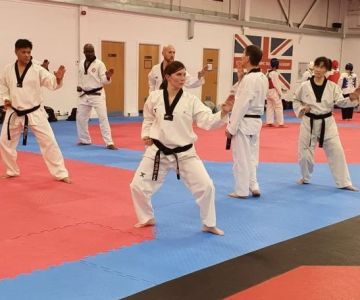
Many martial arts schools practice blocks repeatedly across training floors.
Although repetitive, these drills reinforce coordination and posture.
Partner Reaction Drills Improve Timing
Controlled partner exercises help students adapt to moving targets.
These drills improve defensive awareness under pressure.
Mirror Practice Helps Correct Form
Watching technique in mirrors allows students to identify:
- Shoulder tension
- Poor hand alignment
- Uneven posture
- Weak chambering
Slow Practice Often Improves Faster Than Speed Training
Many instructors encourage slow, precise repetitions before increasing speed.
Careful mechanics create stronger long-term habits.
Real Training Experiences and Lessons From Dojangs
Martial arts students often remember defensive lessons more clearly after practical sparring experiences.
The First Successful Block
A beginner Taekwondo student once described finally landing a clean knife hand block during controlled sparring after weeks of struggling with timing.
The moment boosted confidence dramatically because the movement finally felt natural instead of memorized.
Why Instructors Repeat Fundamentals Constantly
Many students initially become impatient with repetitive basics training.
However, experienced practitioners often realize years later that fundamentals quietly support every advanced technique.
Strong defensive mechanics remain valuable long after colored belt promotions.
Tournament Pressure Changes Everything
Students who perform techniques well in class sometimes struggle during competition because adrenaline changes reaction timing.
Consistent drilling under pressure helps techniques remain reliable during stressful situations.
How Advanced Students Use the Technique
Advanced martial artists rarely use techniques exactly as beginners first learn them.
Blocks Often Blend Into Counters
Experienced practitioners may transition immediately from defense into:
- Counter punches
- Kicks
- Traps
- Angle changes
The block becomes part of a flowing sequence rather than an isolated motion.
Smaller Movements Become More Efficient
Advanced fighters usually minimize unnecessary motion.
Compact defensive actions conserve energy and improve speed.
Reaction Training Evolves Over Time
Beginners think consciously about each movement.
Over time, consistent repetition allows reactions to become more instinctive.
Mental Focus and Confidence During Defense
Defensive training is not only physical.
Fear Management Is Part of Martial Arts Growth
Many beginners feel nervous during partner drills involving face-level attacks.
This reaction is completely normal.
Controlled practice environments help students develop calmness gradually.
Confidence Comes From Repetition
Students often gain confidence after performing successful defensive drills repeatedly.
Trusting technique reduces panic reactions.
Focus Improves Reaction Speed
Mental distraction slows defensive timing.
Martial arts training frequently emphasizes concentration and awareness for this reason.
Building Better Martial Arts Fundamentals
Learning how to perform a basic knife hand block against high section attacks is about far more than memorizing arm movement. The technique teaches coordination, balance, defensive awareness, timing, and mental discipline — all of which become essential foundations for long-term martial arts development.
Students who practice carefully often discover that defensive fundamentals improve overall sparring confidence and movement quality. Strong blocks support stronger counters, smoother footwork, and better composure under pressure.
Although beginners sometimes focus heavily on flashy kicks or fast attacks, experienced instructors consistently emphasize that solid basics create lasting progress.
For martial arts students looking for Taekwondo guidance, technical instruction, training resources, and skill development support, Jeuns TKD Hub can provide valuable information and practical martial arts learning tools.
Like many martial arts fundamentals, the knife hand block may appear simple at first glance. Yet the deeper students explore timing, structure, posture, and reaction control, the more they realize why traditional defensive techniques continue playing an important role in martial arts training around the world.


 Aikido of San Jose4.0 (7 reviews)
 Nikko Jujitsu School4.0 (9 reviews)
 Gracie Barra San Clemente Martial Arts4.0 (47 reviews)
 Karate Institute of America4.0 (4 reviews)
 Keweenaw Korean Martial Arts0.0 (0 reviews)
 Wing Chun School of Internal Arts5.0 (6 reviews)
 How to Execute a Jumping Roundhouse Kick to the Head
 How to Execute a Double Kick Combination in Sparring
 How to Perform a Flawless Axe Kick: A Step-by-Step Guide
 DIY Tae Kwon Do Training Equipment for Home Practice
 How to Increase Your Vertical Jump for Tae Kwon Do Flying Kicks
 The History of the Tae Kwon Do Peace Corps