
- 1- Why Flexibility is Crucial for Tae Kwon Do Kicks
- 2- How Flexibility Enhances Kick Performance
- 3- Flexibility Exercises to Improve Your Kicks
- 4- Common Mistakes in Flexibility Training
- 5- Real-Life Success Stories of Flexibility Training in Tae Kwon Do
1- Why Flexibility is Crucial for Tae Kwon Do Kicks
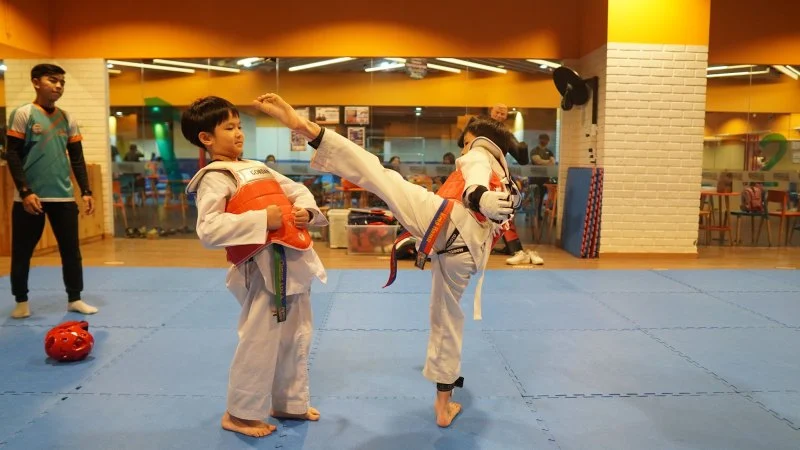
Flexibility plays a significant role in martial arts, especially in Tae Kwon Do, where high, powerful kicks are essential. The ability to kick with precision, height, and speed largely depends on how flexible you are. Without flexibility, even the most skilled practitioners can find their kicks limited in range, form, and effectiveness.
In Tae Kwon Do, kicks are not only about strength; they also require a great deal of agility and mobility. Flexibility helps improve your ability to execute complex techniques, such as spinning kicks, high roundhouses, and side kicks, with proper form and minimal risk of injury. Flexibility training can also increase the fluidity of your movements, allowing you to transition between techniques more smoothly.
Budo Martial Arts Studio / budo martial arts studio
Ewing TownshipMercer CountyNew Jersey
9 Scotch Rd, Ewing Township, NJ 08628, USA
2- How Flexibility Enhances Kick Performance
Flexibility impacts several key aspects of Tae Kwon Do kicks, enhancing your overall performance. Here's how:
- Improved Range of Motion: The more flexible your muscles and joints, the greater the range of motion in your kicks. This enables you to perform high kicks with ease, reaching targets that would otherwise be difficult to strike.
- Better Control and Accuracy: Flexibility allows you to maintain better control over your kicks, helping to target specific areas with precision. Whether it’s a high roundhouse or a swift sidekick, flexibility helps you direct your kick to the desired point with better accuracy.
- Increased Speed: A more flexible body allows you to execute kicks more swiftly. Flexibility helps your muscles stretch and contract more efficiently, leading to faster and more explosive kicks.
- Reduced Injury Risk: Flexible muscles are less likely to strain or tear. Regular stretching enhances muscle elasticity and promotes joint health, helping to prevent injuries during training or sparring sessions.
3- Flexibility Exercises to Improve Your Kicks
To improve flexibility for Tae Kwon Do kicks, it’s important to incorporate regular stretching and mobility exercises into your routine. Here are some exercises that target key muscle groups involved in kicking:
- Hamstring Stretches: The hamstrings play a significant role in high kicks. Perform standing or seated hamstring stretches to improve your range of motion. Try holding the stretch for 30 seconds on each leg to increase flexibility over time.
- Hip Flexor Stretches: Hip flexors are crucial for performing high kicks. To stretch them, try lunging stretches or deep hip openers like pigeon pose to increase mobility in the hip area.
- Quadriceps Stretches: Tight quads can limit the range of motion in your kicks. Try standing quadriceps stretches by pulling one foot towards your glutes and holding for 30 seconds on each side to improve flexibility.
- Dynamic Leg Swings: Leg swings are a great way to loosen up your hips and legs before training. Swing one leg forward and backward, gradually increasing the height of the swing. This dynamic stretch targets your hip flexors, hamstrings, and glutes.
- Butterfly Stretch: This stretch targets the inner thighs and groin muscles, which are essential for side kicks. Sit with your feet together, knees bent outward, and gently press your knees towards the ground to open up your hips and inner thighs.
4- Common Mistakes in Flexibility Training
While flexibility training is essential for improving Tae Kwon Do kicks, many practitioners make common mistakes that can hinder progress or even lead to injury. Here are some mistakes to avoid:
- Overstretching: Stretching too intensely or too quickly can lead to muscle strains or joint injuries. Always ease into stretches and focus on gradual improvement over time.
- Not Warming Up Properly: Flexibility exercises should be done after a proper warm-up. Stretching cold muscles can cause injury. Warm up with light cardio or dynamic movements before engaging in deep stretches.
- Neglecting Other Muscle Groups: Focusing only on the legs and hips might neglect important areas such as the core and lower back. A balanced approach, which includes stretching the entire body, will help improve your kicks and overall mobility.
- Not Being Consistent: Flexibility training requires consistency. Stretching sporadically won’t yield results. Incorporate flexibility exercises into your daily routine for the best results.
5- Real-Life Success Stories of Flexibility Training in Tae Kwon Do
Many Tae Kwon Do practitioners have seen significant improvements in their kicking ability after dedicating time to flexibility training. Take the case of Emily, a 24-year-old black belt from Chicago. She struggled with high kick accuracy and height until she incorporated daily stretching into her routine. After just three months of consistent flexibility training, Emily was able to perform her spinning back kicks with much greater control and height, helping her win in several tournaments.
Real stories like Emily’s show how dedication to flexibility can make a huge difference in your Tae Kwon Do performance. Whether you're a beginner or an advanced practitioner, focusing on flexibility can help you reach your full potential in kicking and other techniques.

 Aikido of San Jose4.0 (7 reviews)
 Nikko Jujitsu School4.0 (9 reviews)
 Gracie Barra San Clemente Martial Arts4.0 (47 reviews)
 Karate Institute of America4.0 (4 reviews)
 Keweenaw Korean Martial Arts0.0 (0 reviews)
 Wing Chun School of Internal Arts5.0 (6 reviews)
 How to Execute a Jumping Roundhouse Kick to the Head
 How to Execute a Double Kick Combination in Sparring
 How to Perform a Flawless Axe Kick: A Step-by-Step Guide
 DIY Tae Kwon Do Training Equipment for Home Practice
 How to Increase Your Vertical Jump for Tae Kwon Do Flying Kicks
 The History of the Tae Kwon Do Peace Corps