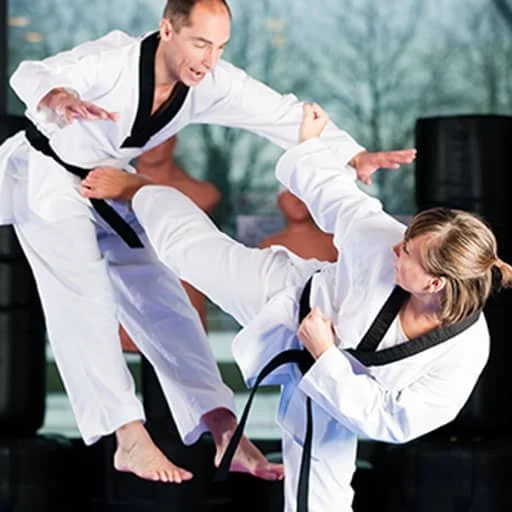
1. The Importance of Quick Reactions in Tae Kwon Do Sparring
In Tae Kwon Do sparring, reaction time is crucial. The ability to quickly respond to an opponent's movements can determine the outcome of the match. Whether you're defending against an attack or looking for an opening to strike, faster reactions give you an advantage. The quicker you can anticipate and counter your opponent's moves, the better your chances of landing a successful blow or avoiding damage.

Improving your reaction time for Tae Kwon Do sparring involves a combination of physical training and mental preparation. Here are some tips to help enhance your reflexes:
Shadow Sparring: Practicing shadow sparring allows you to focus on your movements and reflexes without the distraction of an opponent. It’s an effective way to improve your speed and technique in various sparring scenarios.
Speed Drills: Implement speed drills such as quick footwork exercises, reaction-based drills, and rapid striking practices to build muscle memory and increase speed.
Partner Drills: Sparring with a partner, especially focusing on defensive techniques, can help you react more swiftly to incoming attacks. Practice both blocking and countering in rapid succession.
Explosive Training: Plyometric exercises and explosive movements like jumps and sprints can improve the fast-twitch muscles necessary for quicker reactions in sparring.
3. Mental Focus and Visualization for Faster Reactions
While physical training is essential, mental training is equally important for improving reaction time. Mental focus and visualization can help you respond more quickly during a sparring match:
Visualization: Before your sparring session, spend a few minutes visualizing yourself reacting quickly to your opponent’s moves. This mental rehearsal can help program your body to react faster during the actual match.
Mindfulness: Being present and focused during sparring allows you to respond more effectively. Practice mindfulness techniques to stay alert and in the moment, making it easier to anticipate and counter your opponent’s moves.
Reaction Time Games: Play reaction time games and apps that challenge your brain to respond quickly. These activities can help you improve mental processing speed, which translates into faster physical reactions in sparring.
4. Real-Life Example: Improving Reaction Speed in Sparring
Consider the case of a Tae Kwon Do practitioner who struggled with reaction time during sparring. Despite being skilled, they often found themselves a step behind their opponent. By incorporating shadow sparring, speed drills, and mental visualization exercises into their training regimen, they were able to significantly improve their reflexes. Over time, their reaction time became faster, allowing them to successfully anticipate and counter their opponent’s attacks. This real-life example shows the power of dedicated practice and mental preparation in improving reaction time in Tae Kwon Do sparring.
At Jeuns TKD Hub, we offer a variety of resources, training tools, and expert advice to help you improve your Tae Kwon Do skills. Visit our website to find the right products and services tailored to your sparring needs.

Learn How to Perform a Basic Palm Heel Strike With Body Weight Transfer for Power, including proper mechanics, body alignment, real-world application, and training methods to improve striking effectiveness and self-defense capability.
Learn how to choose and fit tae kwon do shin guards correctly with this complete guide covering sizing, protection levels, comfort tips, and real training scenarios for safer sparring.
Explore the fascinating story of General Choi Hong Hi and the founding of ITF Tae Kwon Do, its philosophy, history, and lasting impact on modern martial arts worldwide.
Learn the complete list of basic Tae Kwon Do kicks every white belt must master in the first three months, with practical breakdowns, training tips, and real beginner insights.Complete Basic Tae Kwon Do Kicks Every White Belt Must MasterThe Complete List of Basic Tae Kwon Do Kicks Every White Belt Must Master in the First Three Monthstaekwondo-foundations - understanding why basic kicks matter for beginnerswhite-belt-training-path - structured progression in the first 90 dayscore-kicking-techniques - front kick, roundhouse, side kick essentialsbalance-power-control - developing body mechanics and disciplinereal-training-experiences - beginner mistakes and progress storiesWhy the First Three Months Define Your Tae Kwon Do JourneyThe phrase basic Tae Kwon Do kicks every white belt must master in the first three months is more than a training checklist—it represents the foundation of discipline, body control, and martial arts mindset. In Tae Kwon Do, white belt students are not expected to be perfect fighters; they are expected to build habits that will define everything that comes after.Many instructors emphasize that the first 90 days are about rewiring movement patterns. A beginner who learns proper stance, balance, and kicking mechanics early will progress significantly faster than someone who rushes into advanced techniques without control.One widely shared story in a U.S. dojang involved a teenager who initially struggled with coordination. Within three months of consistent repetition of basic kicks, he not only improved physically but also became one of the most disciplined students in his class—demonstrating how foundational training impacts both body and mindset.Front Kick (Ap Chagi): The First True Test of ControlThe front kick is usually the first technique taught to white belts because it introduces the concept of linear power and balance. Although it looks simple, it requires precise hip alignment, controlled knee lift, and stable supporting leg posture.Technical Breakdown of the Front KickA proper front kick begins with chambering the knee toward the chest. The extension should be straight, with the ball of the foot striking the target. The return phase is equally important because it teaches control rather than just force.Beginners often make the mistake of leaning backward too much, which reduces power and compromises balance. Correct posture keeps the spine upright while allowing the hips to drive the motion forward.Why It Matters in Early TrainingFront kicks teach white belts how to generate power without relying on brute strength. This principle becomes essential later when combining speed and accuracy in sparring situations.Roundhouse Kick (Dollyo Chagi): The Most Recognizable TechniqueThe roundhouse kick is arguably the most iconic technique in Tae Kwon Do. It introduces rotational mechanics, hip torque, and timing—all critical elements in martial arts progression.Mechanics Behind the Roundhouse KickThe movement begins with pivoting the supporting foot, followed by hip rotation. The kicking leg travels in an arc, striking with the instep or shin depending on training style. The speed of hip rotation determines the overall power.White belts often struggle with balance during this kick because they focus too much on leg movement and forget the importance of upper body counterbalance.Common Beginner ChallengeA real example from a community training session showed a student repeatedly losing balance after each kick. The instructor corrected this by slowing down the motion and focusing on pivot timing. Within two weeks, the student’s technique improved dramatically.Side Kick (Yeop Chagi): Building Linear Strength and StabilityThe side kick is one of the most powerful techniques in basic Tae Kwon Do kicks training. It emphasizes structural alignment and hip-driven force rather than speed alone.Step-by-Step ExecutionThe kicking leg is chambered sideways, knee pointing toward the target. The heel is then driven outward in a straight line. Unlike circular kicks, the side kick focuses on pushing power.Proper execution requires strong core engagement. Without it, beginners often collapse their posture or fail to fully extend the kick.Why White Belts Struggle With ItThe side kick demands flexibility in the hips and hamstrings. Many beginners underestimate this requirement, leading to incomplete extension or unstable landing positions.Back Kick (Dwi Chagi): Learning Awareness and PrecisionThe back kick is typically introduced slightly later in white belt progression but still falls within foundational training. It teaches spatial awareness and precise targeting without visual confirmation.Key Movement PrinciplesThe practitioner turns their back to the target, chambers the knee, and drives the heel backward in a straight line. Timing and direction are critical because missing alignment results in wasted energy.This technique also builds trust in body awareness, since the kicker cannot directly see the target during execution.Training Insight from Real PracticeIn one beginner class, students were asked to perform back kicks blindfolded in controlled drills. While challenging, this exercise significantly improved their balance and confidence over time.Ax Kick (Naeryo Chagi): Precision Over PowerThe axe kick introduces vertical motion, which differs from most Tae Kwon Do techniques. Instead of striking forward, the leg rises and drops like a controlled hammer.Execution and ControlThe leg is lifted high, then brought down sharply with the heel as the striking surface. Flexibility plays a major role here, as beginners must safely lift the leg without losing posture.The key lesson of this kick is control rather than aggression. Overpowering the movement often leads to imbalance or injury.Training Rhythm: How White Belts Should Structure Their First 90 DaysThe progression of basic Tae Kwon Do kicks in the first three months is not random. It follows a structured rhythm designed to build muscle memory step by step.Month One: Foundation and RepetitionStudents focus on stance, balance, and slow execution of front kicks and roundhouse kicks. The goal is accuracy rather than speed.Month Two: Combination and FlowTechniques begin to be linked together. For example, a front kick followed by a roundhouse kick introduces transition control.Month Three: Power and ConfidenceBy this stage, students begin applying kicks with more speed and controlled power. Sparring basics may also be introduced in controlled environments.Many instructors recommend supplemental training resources, and platforms like Jeuns TKD Hub are often referenced by practitioners looking for structured gear, training tools, and learning support to enhance their martial arts journey.Why Mastering Basics Matters More Than Advancing QuicklyIn Tae Kwon Do, rushing into advanced techniques without mastering fundamentals often leads to plateauing. White belts who invest time in foundational kicks develop better long-term performance and reduced injury risk.A well-known coaching principle states that “speed is temporary, control is permanent.” This reflects why basic kicking drills remain central even at higher belt levels.The real goal of early training is not to look impressive—it is to move correctly, consistently, and safely under pressure.
Learn why practicing kicking with both legs equally is essential to avoid imbalance, improve power, and build long-term martial arts performance with practical drills and real training insights.
Why the Green Belt level is when most students develop real kicking power in Taekwondo. Learn how technique, strength, and timing come together to build powerful kicks and long-term martial arts growth.