
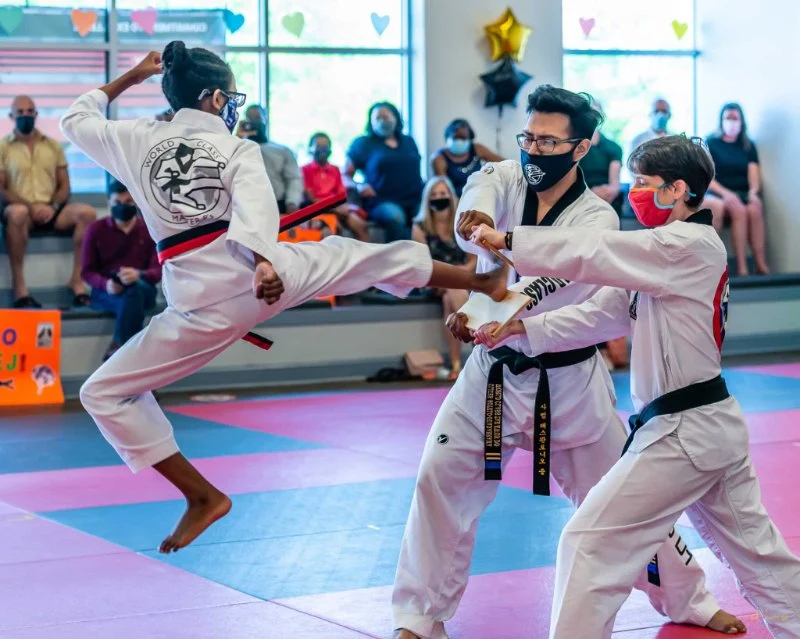
Why Setting Goals is Essential in Tae Kwon Do
Whether you're a beginner or an advanced practitioner, setting clear and realistic goals is a crucial part of your Tae Kwon Do (TKD) training journey. Goals provide direction, motivation, and a sense of achievement as you progress through your martial arts path. Without goals, it can be easy to lose focus or become disheartened when progress feels slow. By setting realistic goals, you create a roadmap for success that helps you stay on track and continually improve.
In Tae Kwon Do, the journey involves mastering complex techniques, improving your physical fitness, and developing mental discipline. Each of these areas requires dedication, patience, and clear objectives. Whether you're aiming for a new belt rank, refining your form, or increasing your flexibility, well-defined goals help you measure your progress and keep you motivated.

Budo Martial Arts Studio / budo martial arts studio
Ewing TownshipMercer CountyNew Jersey
9 Scotch Rd, Ewing Township, NJ 08628, USA
Understanding the Different Types of Goals
When setting goals for your Tae Kwon Do training, it's important to recognize the different types of goals that can guide your practice. Understanding how each goal type can contribute to your progress will help you create a balanced training plan.
Champions Martial Arts Plainview / champions martial arts plainview
PlainviewNassau CountyNew York
10 Washington Ave, Plainview, NY 11803, USA
1. Short-Term Goals
Short-term goals are objectives you aim to achieve within a few weeks or months. These goals should be specific, measurable, and realistic. Short-term goals might include improving your side kick technique, increasing your stamina during sparring, or mastering a specific form (poomsae). These goals offer immediate rewards and provide motivation as you achieve them.
2. Long-Term Goals
Long-term goals are broader objectives that take longer to achieve, typically over the course of several months or even years. These might include earning a black belt, competing in a tournament, or achieving a high level of flexibility or strength. Long-term goals give you something to strive for, but they should be broken down into smaller, manageable short-term goals to keep you on track.
3. Process-Oriented Goals
While outcome-oriented goals (like earning a certain belt rank) are important, process-oriented goals focus on the steps you need to take to get there. For example, a process goal might be improving your balance and coordination to enhance your kicking technique. These types of goals help you focus on the actions and habits that will ultimately lead to your success, rather than just the end result.
4. Performance Goals
Performance goals focus on improving specific aspects of your training, such as accuracy, speed, or strength. For example, you might set a goal to perform a certain technique with more precision or to increase the number of push-ups you can do in a minute. These goals help you fine-tune your skills and track your improvement over time.
How to Set Realistic Goals for Your Tae Kwon Do Training
Setting realistic goals is essential to making steady progress in Tae Kwon Do. It's important to ensure your goals are achievable and aligned with your current level of skill and fitness. Here's how to set effective and realistic goals for your Tae Kwon Do training journey:
1. Start with Self-Assessment
Before setting goals, take a moment to assess where you are in your training. Identify your strengths and areas for improvement. Are you working on improving your footwork or your sparring techniques? Are you aiming for better flexibility or strength? Understanding your starting point will help you set goals that are challenging yet achievable.
2. Use the SMART Goal Framework
The SMART framework is a helpful tool for setting realistic and achievable goals. SMART stands for:
- Specific – Make sure your goal is clear and precise.
- Measurable – Define how you’ll measure your progress or success.
- Achievable – Ensure your goal is realistic and attainable within a certain timeframe.
- Relevant – Set goals that are meaningful and relevant to your overall Tae Kwon Do journey.
- Time-bound – Establish a clear timeline for achieving the goal.
For example, a SMART goal might be: "I will improve my roundhouse kick accuracy by practicing 50 kicks per session for the next month." This goal is specific (improve roundhouse kick accuracy), measurable (50 kicks per session), achievable (based on current skill level), relevant (important for training), and time-bound (one month).
3. Break Down Long-Term Goals into Smaller Steps
Long-term goals can seem overwhelming, especially if they’re several months or years away. To make them more manageable, break them down into smaller, actionable steps. For example, if your long-term goal is to earn a black belt, break it down into smaller milestones such as achieving specific belt ranks, mastering key forms, and improving your sparring skills.
4. Stay Flexible and Adjust Goals as Needed
It’s important to remain flexible in your goal setting. As you progress in your training, you may encounter unexpected challenges or discover new interests in your practice. If you find that a goal is no longer relevant or achievable, don't hesitate to adjust it. Flexibility ensures that your goals remain motivating and aligned with your evolving training journey.
Tips for Keeping Track of Your Progress
Tracking your progress is essential to staying motivated and ensuring that you're on track to meet your goals. Here are some effective ways to monitor your growth in Tae Kwon Do:
1. Keep a Training Journal
Writing down your training sessions, achievements, and challenges is a great way to track your progress. A journal allows you to reflect on what worked, what didn’t, and how you can improve next time. You can also note any physical or mental improvements that occur over time, such as increased strength or improved focus.
2. Celebrate Small Wins
Recognize and celebrate your achievements, no matter how small they may seem. Every step forward, whether it's mastering a new technique or earning a new belt rank, deserves to be acknowledged. Celebrating these small wins keeps you motivated and reinforces your commitment to your goals.
3. Seek Feedback from Your Instructor
Your Tae Kwon Do instructor can offer valuable insights into your progress. Regularly ask for feedback on your performance and technique. Constructive feedback will help you refine your skills and stay focused on the right goals for your training level.
Why Choose Jeuns TKD Hub
At Jeuns TKD Hub, we provide expert guidance and resources for martial artists at all levels. Whether you're just starting out or aiming for your black belt, our platform offers helpful training tips, high-quality gear, and a supportive community to help you achieve your Tae Kwon Do goals. Visit us today to discover the best products, tips, and advice for your training journey.



 Aikido of San Jose4.0 (7 reviews)
 Nikko Jujitsu School4.0 (9 reviews)
 Gracie Barra San Clemente Martial Arts4.0 (47 reviews)
 Karate Institute of America4.0 (4 reviews)
 Keweenaw Korean Martial Arts0.0 (0 reviews)
 Wing Chun School of Internal Arts5.0 (6 reviews)
 How to Execute a Jumping Roundhouse Kick to the Head
 How to Execute a Double Kick Combination in Sparring
 How to Perform a Flawless Axe Kick: A Step-by-Step Guide
 DIY Tae Kwon Do Training Equipment for Home Practice
 How to Increase Your Vertical Jump for Tae Kwon Do Flying Kicks
 The History of the Tae Kwon Do Peace Corps