
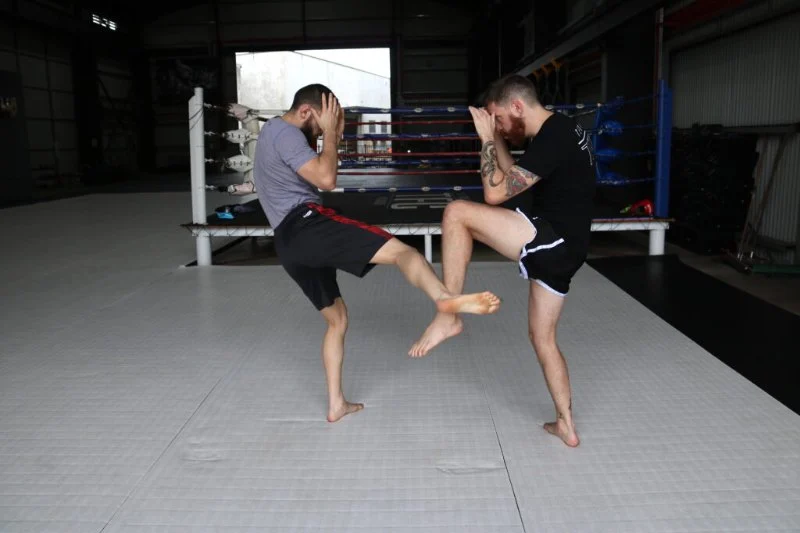
How to Perform a Checking Kick to Control the Distance
- Understanding the Checking Kick
- Steps to Perform a Checking Kick
- Why the Checking Kick is Effective in Controlling Distance
- Common Mistakes to Avoid When Performing a Checking Kick
- How to Improve Your Checking Kick
Understanding the Checking Kick
The checking kick is a fundamental technique used in martial arts, especially in Taekwondo, to control the distance between you and your opponent. This kick allows you to create space when you're under pressure, disrupt your opponent's rhythm, and maintain control of the fight. The checking kick, unlike a traditional kick aimed at the opponent's body or head, is typically aimed at their midsection or the lower part of their body, with the intent to push them back or off-balance them.
Budo Martial Arts Studio / budo martial arts studio
Ewing TownshipMercer CountyNew Jersey
9 Scotch Rd, Ewing Township, NJ 08628, USA
Steps to Perform a Checking Kick
Performing a checking kick requires precision, timing, and correct technique. Here's a step-by-step breakdown of how to execute it effectively:
Champions Martial Arts Plainview / champions martial arts plainview
PlainviewNassau CountyNew York
10 Washington Ave, Plainview, NY 11803, USA
1. Establish Your Stance
Before delivering the checking kick, ensure you're in a stable stance. Your weight should be evenly distributed between both legs, with your knees slightly bent to maintain balance. A solid foundation allows you to move quickly and react to your opponent’s movements.
2. Lift Your Knee
The first part of the checking kick is lifting your knee. Bring your knee up towards your chest while keeping your foot relaxed. This motion should be quick and controlled, with the intent to keep your kick compact.
3. Extend Your Foot
Once your knee is lifted, extend your foot towards your opponent’s midsection or lower body. The goal is not to kick with full force but to use the kick as a tool to disrupt the opponent's movement and create distance. Your foot should make contact with their body or push against their leg, causing them to retreat slightly.
4. Follow Through with Control
Unlike a powerful roundhouse or front kick, the checking kick relies more on control than power. Follow through with a controlled push and quickly retract your leg back into your stance. This will allow you to stay on guard and ready for the next move.
Why the Checking Kick is Effective in Controlling Distance
The checking kick is effective for controlling distance because it creates a barrier between you and your opponent. By using this technique, you prevent your opponent from closing the distance, which could otherwise lead to a more aggressive or dangerous attack. The quick and controlled nature of the kick allows you to maintain control of the pace and positioning of the fight, especially when you're facing a more aggressive opponent.
Common Mistakes to Avoid When Performing a Checking Kick
As with any technique, mistakes can undermine the effectiveness of the checking kick. Here are a few common errors to avoid:
1. Overextending the Kick
While it's tempting to add power to your checking kick, overextending can leave you vulnerable to counterattacks. A checking kick should be quick, controlled, and precise. Overextending your foot could unbalance you and make you an easy target.
2. Failing to Recoil Quickly
Another common mistake is not retracting your foot fast enough. After executing the checking kick, it’s important to quickly return to your defensive stance. Failing to do so could leave you exposed to follow-up attacks from your opponent.
3. Lack of Focus on Targeting
Some practitioners might throw a checking kick without focusing on the specific area of the opponent’s body. Aim your kick at their midsection, lower abdomen, or the side of their knee. A well-placed checking kick can make all the difference in disrupting your opponent’s balance and creating the necessary space for you to react or counter.
How to Improve Your Checking Kick
To become proficient at the checking kick, it's important to incorporate these training techniques into your practice routine:
1. Practice Footwork and Timing
The checking kick is all about timing and footwork. Practice your footwork by incorporating drills that emphasize quick reactions and proper distance management. Work on reacting to your opponent’s movements and adjusting your distance in real-time.
2. Build Strength in Your Legs and Core
The power and control of the checking kick come from strong legs and a stable core. Incorporate strength training exercises, such as lunges, squats, and core exercises like planks, into your routine. These exercises will improve your balance and help you execute the kick more effectively.
3. Shadowboxing and Partner Drills
Shadowboxing is a great way to practice the checking kick in a more fluid and dynamic environment. Pair up with a training partner and practice the kick with them at different distances and speeds. This will help you refine your technique and apply it in live situations.
If you're looking to improve your technique and find the best gear for your training, visit Jeuns TKD Hub for top-quality Taekwondo equipment and apparel that will support your journey toward mastery.


 Aikido of San Jose4.0 (7 reviews)
 Nikko Jujitsu School4.0 (9 reviews)
 Gracie Barra San Clemente Martial Arts4.0 (47 reviews)
 Karate Institute of America4.0 (4 reviews)
 Keweenaw Korean Martial Arts0.0 (0 reviews)
 Wing Chun School of Internal Arts5.0 (6 reviews)
 How to Execute a Jumping Roundhouse Kick to the Head
 How to Execute a Double Kick Combination in Sparring
 How to Perform a Flawless Axe Kick: A Step-by-Step Guide
 DIY Tae Kwon Do Training Equipment for Home Practice
 How to Increase Your Vertical Jump for Tae Kwon Do Flying Kicks
 The History of the Tae Kwon Do Peace Corps